Most people think identity is personal.
They think it is about their job, their family role, their beliefs, their past, their personality, or the story they tell themselves about who they are.
But identity is also built on the world we believe we live in.
If that world changes, identity changes with it.
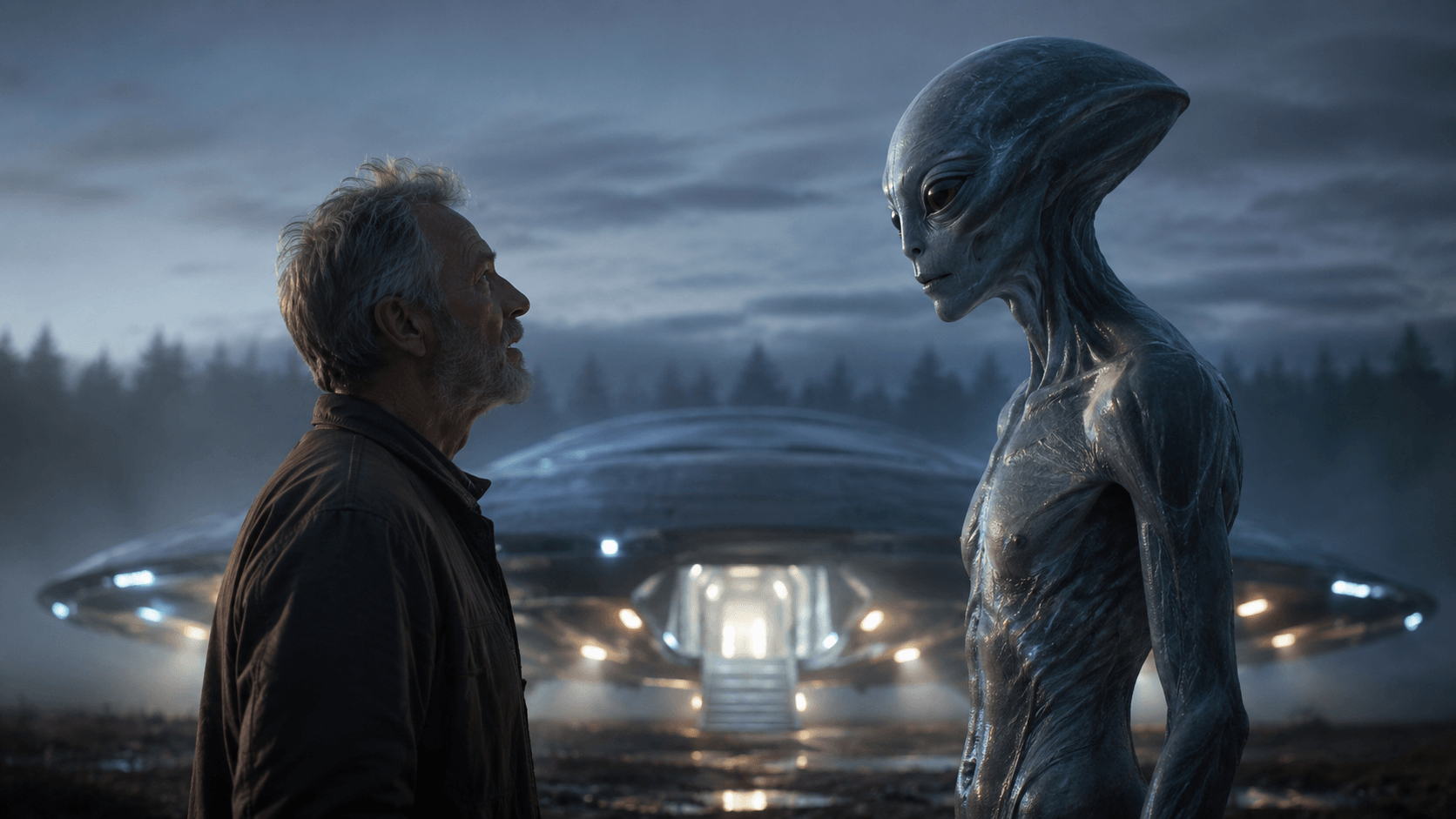
That is why the subject of UFOs, extra-terrestrial life, hidden technology, suppressed history and possible government secrecy is not just a curiosity. It may become one of the greatest identity shocks humanity has ever faced.
For decades, people have been taught a fairly simple story.
Humanity is the most advanced intelligent life we know. Our civilisation has developed slowly through accepted history. Our science, medicine, energy systems and technology represent the best available progress of the modern world. Governments may make mistakes, but broadly speaking, they tell the public what they need to know.
But what happens if large parts of that story begin to collapse?
What happens if people are forced to consider that we are not alone? What happens if they learn that more advanced intelligences may exist? What happens if they discover that technologies, patents, medical possibilities, energy breakthroughs, or parts of our true history may have been hidden, delayed, controlled, or suppressed?
The shock would not simply be intellectual.
It would be emotional and spiritual.
People would not only ask, “What is true?”
They would ask:
“What else was I wrong about?”
That question can shake a person to the core.
Because most people do not build their lives on evidence alone. They build their lives on trust. They trust schools, experts, media, doctors, institutions, governments, textbooks, professional bodies, and the general story of reality they inherited.
If that trust breaks suddenly, the result can be destabilising.
A person may feel anger at being misled. Grief over wasted years. Shame for having believed false stories. Fear about what else may be hidden. Confusion about whom to trust next. And perhaps most painfully, a deep sense of betrayal.
Betrayal is one of the hardest emotions for the human nervous system to process.
It is difficult enough when betrayal comes from one person. But what happens when people feel betrayed by entire systems?
That is the real danger of multiple identity shocks arriving close together.
AI may challenge our identity around work.
Economic change may challenge our identity around security.
Disclosure may challenge our identity around humanity’s place in the universe.
Hidden history may challenge our identity around civilisation.
Suppressed technology may challenge our identity around progress.
Health revelations may challenge our identity around medicine, trust and mortality.
Each shock asks the same question in a different form:
“Who am I now that the old story no longer holds?”
This is why disclosure, if it unfolds, will need far more than documents, interviews, hearings and dramatic headlines.
People will need emotional support. They will need spiritual grounding. They will need time to grieve. They will need help separating truth from fantasy, evidence from fear, and awakening from psychological overwhelm.
Not everyone will process revelation in the same way.
Some will deny it.
Some will become angry.
Some will become obsessed.
Some will feel liberated.
Some will feel terrified.
Some will not know what to believe anymore.
That is why the pace and framing of disclosure matters. Too much too quickly could fracture people’s sense of reality. Too little truth, slowly drip-fed, could deepen mistrust. Either way, the human being at the centre of the process must not be forgotten.
The deepest issue is not only whether extra-terrestrials exist.
The deepest issue is whether humanity can survive the collapse of false identity without losing its soul.
Because if people discover they have been living inside managed stories, the temptation will be to fall into despair or rage. But those are not the only options.
There is another possibility.
The collapse of false belief can become the birth of deeper consciousness.
This is where identity work becomes essential.
We need to help people return to the self beneath the programming. Beneath the official stories. Beneath the fear. Beneath the inherited beliefs. Beneath the shock of discovering that reality may be far larger, stranger and more complex than they were told.
This is where the Identity Awakening System may help.
IAS is designed to help people examine the roles, labels, beliefs, fears and inherited identities that shaped their lives. In a time of disclosure, that work becomes even more important. People may need a calm process for asking: What did I believe? Why did I believe it? What part of me feels threatened? What truth can I hold without losing my centre? Who am I beyond the systems that defined reality for me?
The aim is not to replace one rigid belief system with another.
The aim is to become strong enough, grounded enough and spiritually mature enough to face truth without collapsing.
Humanity may be moving toward a period where many old stories break at once.
The question is not only whether people can handle the truth.
The question is whether they have been prepared to rediscover themselves after the truth arrives.
That may be the real awakening.