There is a strange kind of pain that comes from changing.
But there is also a deeper pain that comes from refusing to change.
At first, clinging to an old identity can feel safe. It gives us something familiar to hold onto. It tells us who we are, where we belong, what people expect from us, and how life is supposed to work.
Even if the old identity no longer makes us happy, at least we understand it.
That is why many people stay loyal to a version of themselves they have already outgrown.
They remain in the job that drains them.
They keep performing the role that exhausts them.
They defend beliefs that no longer feel true.
They keep measuring their worth by titles, salaries, approval, routines and institutions that may already be breaking down.
Fear makes the old identity look like protection.
But sometimes it is not protection.
Sometimes it is captivity with better furniture.
The old identity may have served us once. It may have helped us survive, earn money, raise a family, gain respect, or feel useful. There is no need to despise it. The problem begins when we keep clinging to it after its season has passed.
Then it begins to cost us.
It costs us energy, because pretending is exhausting.
It costs us creativity, because the soul cannot create freely while trapped inside a role that no longer fits.
It costs us peace, because part of us knows we are betraying something true inside ourselves.
It costs us purpose, because we keep investing our life force in maintaining the past instead of building the future.
And perhaps most painfully, it costs us time.
Years can pass while we wait for courage.
We tell ourselves we are being sensible. We say the timing is not right. We say we need more certainty, more money, more approval, more confidence. But beneath all those explanations is often one simple truth:
We are afraid.
Afraid of losing income.
Afraid of being judged.
Afraid of starting again.
Afraid of being misunderstood.
Afraid of discovering that we are not who we thought we were.
Afraid that if we leave the old identity behind, there may be nothing solid underneath.
That final fear is the deepest one.
The fear that without the role, the title, the job, the belief system, the social position, or the familiar story, we may become nobody.
But what if the opposite is true?
What if clinging to the old identity is what keeps us from discovering who we really are?
This question is becoming more urgent because the world itself is changing fast.
AI, automation, robotics, digital systems and economic disruption may soon force millions of people to confront identity change whether they feel ready or not. Many people who built their lives around employment, professional usefulness, corporate ladders or predictable income may discover that the system no longer needs them in the same way.
That is not just an economic shock.
It is an identity shock.
For generations, work has not only provided income. It has organised time, created social status, given people routines, and told them who they were. A person could say, “I am a banker,” “I am a teacher,” “I am a driver,” “I am a manager,” “I am an administrator,” and that role carried meaning.
But what happens when the system begins to automate the roles people used to depend on for identity?
What happens when people are given money, perhaps even some form of Universal Basic Income, but lose the work that gave them structure, purpose and belonging?
What happens when people suddenly have time to think?
That may be the part many ruling systems fear most.
A population that is overworked, indebted, distracted and exhausted is easier to manage. But a population that has lost faith in the old story, has time to question reality, and begins asking deeper questions about work, money, health, education, government, media and authority may become much harder to control.
This is why the future may involve a battle between awakening and control.
On one path, people are supported into creativity, self-knowledge, local community, entrepreneurship, spiritual maturity and meaningful contribution.
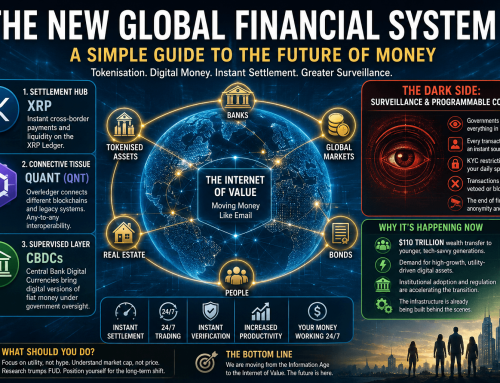
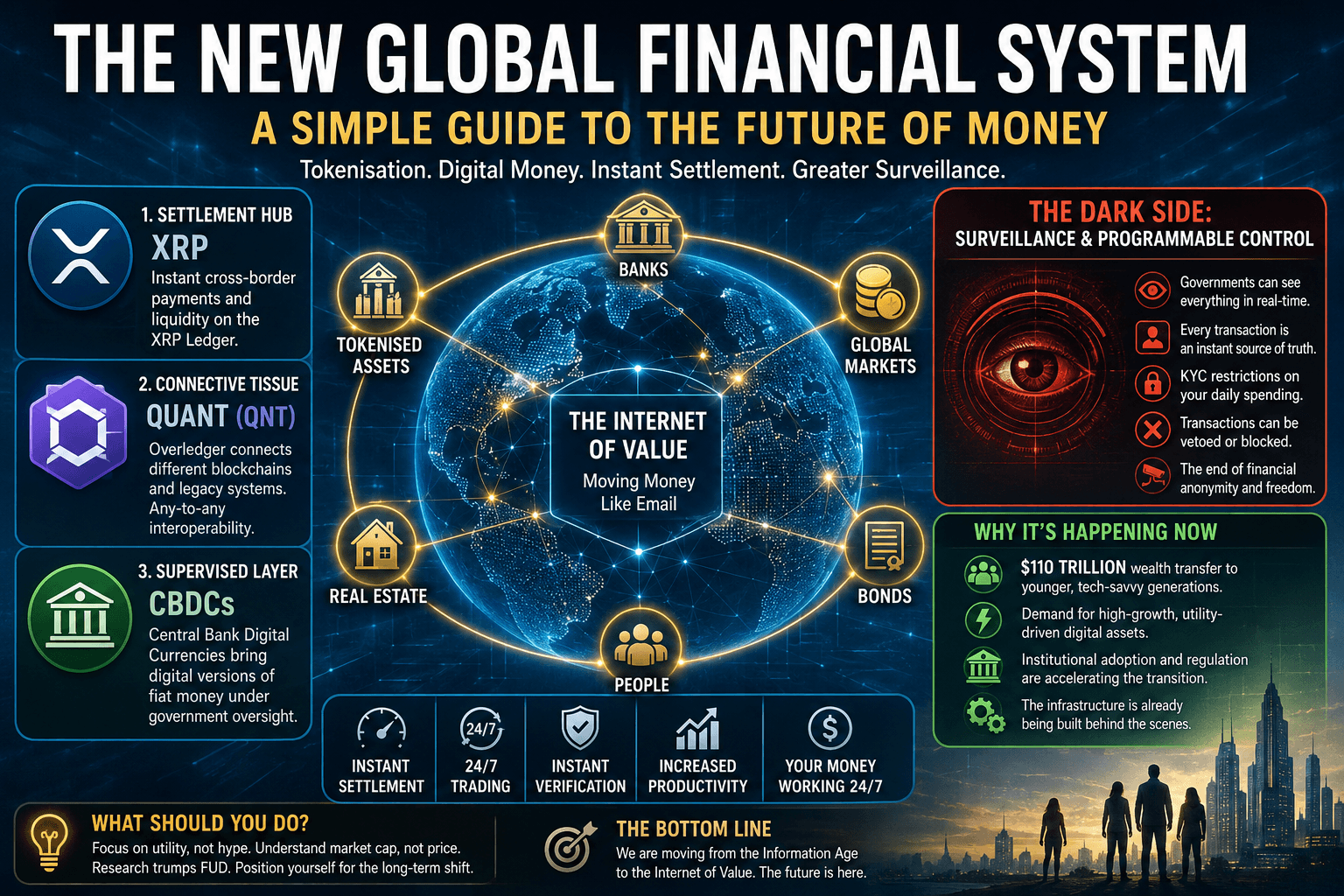
On the other path, people are managed through surveillance, digital ID, programmable money, behavioural tracking, censorship, dependency and fear.
The issue is not technology itself.
Technology can liberate or control. AI can help people create, learn and rebuild. But it can also become part of a system that reduces human beings to data, compliance scores and economic usefulness.
That is why inner identity work matters.
If we do not know who we are, we will allow systems to tell us.
If we do not create meaning from within, we will accept whatever meaning is handed to us.
If we do not develop inner sovereignty, we may trade freedom for comfort.
And if we cling to old identities because we are afraid to change, we may find ourselves defending a world that is already disappearing.
The future will not belong only to those who know how to use AI.
It will belong to those who can stay grounded while everything changes.
It will belong to those who can ask deeper questions:
Who am I without the job?
Who am I without the system’s approval?
What beliefs did I inherit rather than choose?
What value can I create from my wisdom, experience and consciousness?
How do I remain free inside myself when the outer world becomes more controlled?
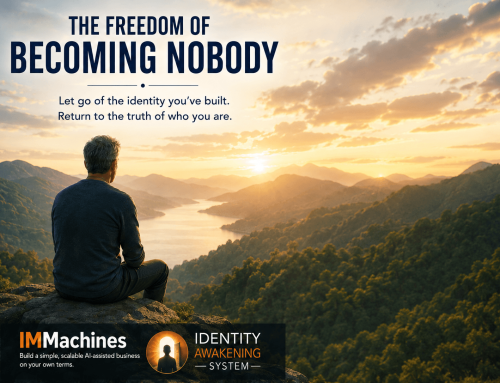
This is where the Identity Awakening System can help.
IAS is not simply about personal development. It is about helping people examine the roles, labels, fears, beliefs and inherited identities that have shaped their lives. It helps people move from unconscious dependence on external systems toward inner clarity, self-trust, discernment and creative contribution.
In simple terms, IAS helps people move from:
“What role will the system give me?”
to:
“What value can I create from who I truly am?”
That shift may become one of the most important transitions of the coming age.
Because the cost of clinging to an old identity is no longer only personal. It may also make us easier to control.
If our identity depends entirely on the system, then when the system changes, we collapse.
But if our identity is rooted in something deeper — truth, soul, consciousness, creativity, faith, wisdom, love and purpose — then we may bend, grieve, adapt and rebuild without losing ourselves.
The question is not only:
What will it cost me to change?
The deeper question is:
What is it already costing me to stay the same?
Because sometimes the safest-looking cage is still a cage.
And sometimes the door only opens when we stop calling it home.