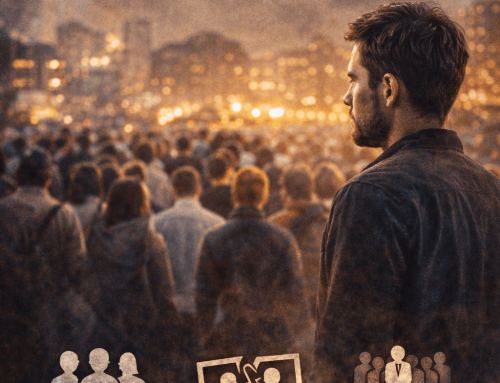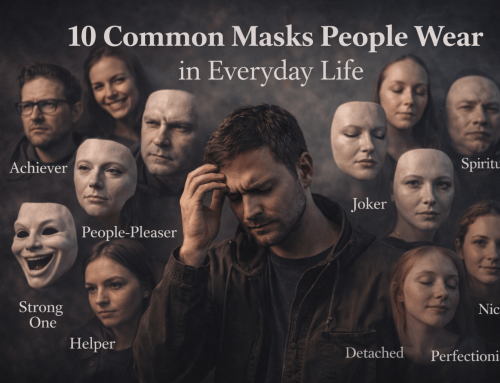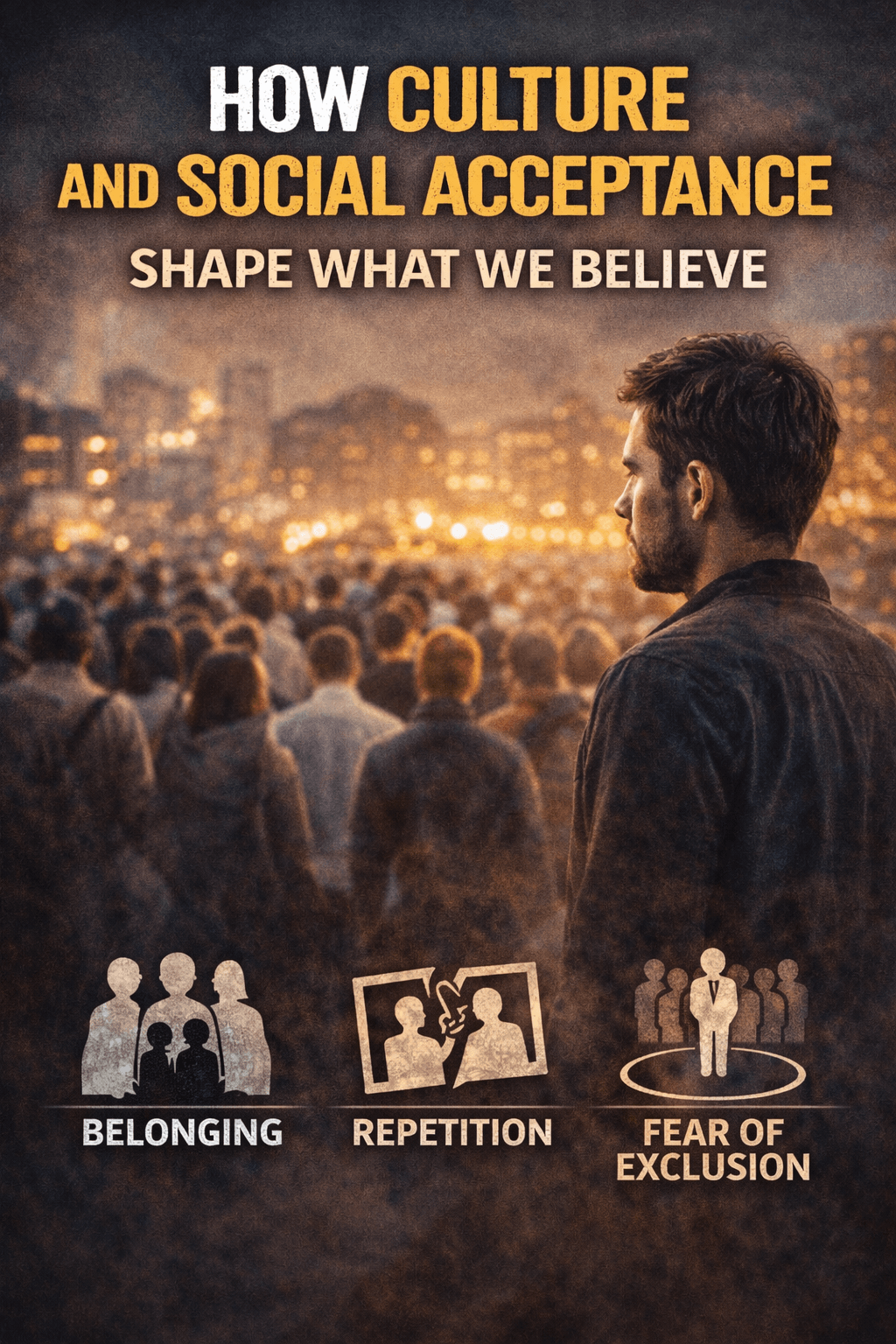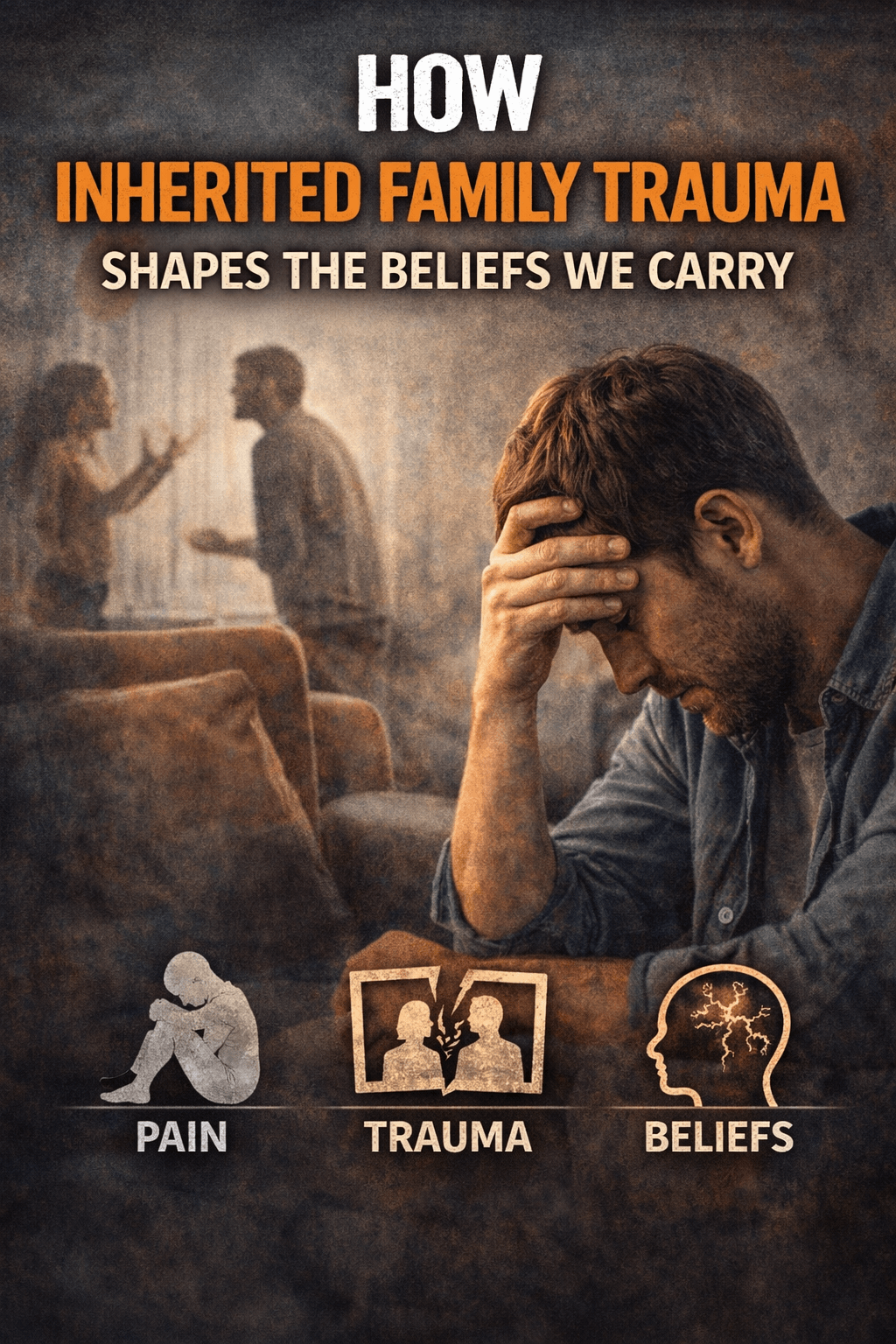
For centuries, human progress has been measured by what we could build outside ourselves.
We built empires.
We built machines.
We built industries, economies, and digital networks that now connect the planet in real time.
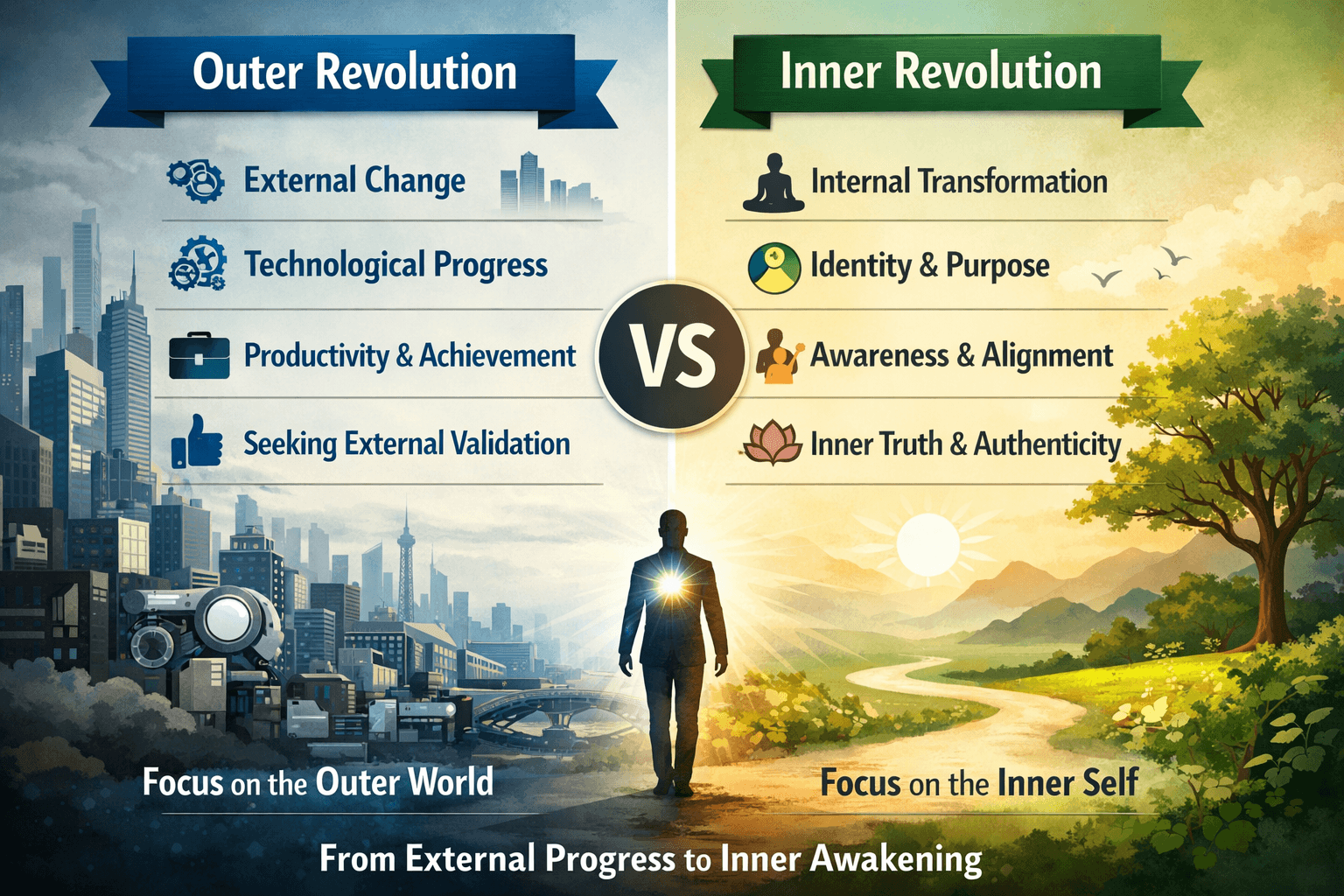
The modern world is obsessed with external revolution.
We look outward for progress:
new technologies, new systems, new markets, new tools.
And yet beneath all of this acceleration, a deeper truth is emerging:
the next great human revolution is not external.
It is inner.
The real frontier is no longer only in the world around us.
It is in human identity, consciousness, meaning, and the ability to live from inner truth rather than inherited programming.
In an age shaped by artificial intelligence, automation, and rapid social change, the deepest transformation may not be what humanity creates next.
It may be who humanity becomes next.
The Age of Outer Progress
Human civilization has been shaped by a series of outer revolutions.
The agricultural revolution changed how people survived.
The industrial revolution changed how people worked.
The digital revolution changed how people communicated and processed information.
Now the AI revolution is changing how people think, create, and organize society.
Each revolution expanded human capability.
But there is an uncomfortable pattern hidden inside this story.
As outer power increased, inner clarity did not always grow with it.
We became more productive, but not necessarily more fulfilled.
More connected, but not necessarily more grounded.
More informed, but not necessarily more wise.
This is why so many people feel a strange tension in modern life.
The world looks more advanced than ever.
But many people feel more fragmented than ever.
That is not a technological failure.
It is a signal that external progress has outpaced inner development.
The Crisis Beneath the Acceleration
Modern life has created extraordinary external complexity.
People now navigate:
-
constant information
-
infinite options
-
shifting social norms
-
economic uncertainty
-
technological disruption
-
identity pressure from every direction
For a while, the old systems held things together.
Work gave people structure.
Institutions gave people meaning.
Culture gave people roles to play.
But those structures are weakening.
Artificial intelligence is challenging the link between work and worth.
Institutions are losing trust.
Social media has multiplied comparison and confusion.
The old maps no longer work.
This creates a deeper crisis than most people realize.
It is not just a crisis of work.
It is not just a crisis of economics.
It is not just a crisis of politics.
It is a crisis of inner orientation.
People increasingly do not know:
-
who they are
-
what they value
-
what is true for them
-
what kind of life they are meant to create
And when inner orientation collapses, outer progress stops feeling meaningful.
Why the Future Cannot Be Solved Only Externally
Most modern solutions are still external.
When people feel lost, they are often told to:
-
be more productive
-
optimize their habits
-
learn more skills
-
work harder
-
consume more information
But these responses often deepen the problem.
Why?
Because they assume the issue is performance.
Often it is not.
Often the real issue is that a person is trying to build a future through an identity that no longer fits.
No amount of external adjustment can fully solve an internal misalignment.
You can improve your tools and still feel empty.
You can increase your income and still feel disconnected.
You can look successful from the outside and still feel unsure who you are.
This is why the next revolution must be inner.
Because the next chapter of human life cannot be built sustainably on an outdated inner foundation.
The Inner Revolution
An inner revolution begins when a person stops living entirely from inherited identity.
It begins when they question:
-
the role they were taught to play
-
the beliefs they never chose
-
the definitions of success they absorbed unconsciously
-
the expectations they have been carrying for years
This is not rebellion for the sake of rebellion.
It is recognition.
It is the moment someone begins to sense:
“The world I was trained for no longer exists.
And the self I built to survive it no longer fully fits.”
That moment can feel disorienting.
But it is also the doorway to freedom.
Because once a person begins to see clearly, they can begin to choose consciously.
The inner revolution is the shift from unconscious identity to conscious identity.
From role to essence.
From performance to alignment.
From conditioning to truth.
Why AI Makes This Inner Shift Urgent
Artificial intelligence makes this revolution more urgent, not less.
For generations, many people defined themselves through what they could do better than machines.
Work was identity.
Skill was value.
Productivity was worth.
But AI is disrupting that foundation.
As machines increasingly perform tasks once considered uniquely human, many people are being pushed toward a new question:
If my value is no longer defined by output, then who am I?
This is one of the most important questions of our time.
And it cannot be answered by technology alone.
It must be answered through identity.
That is why the future will not belong only to the most technically capable.
It will increasingly belong to the most internally clear.
Those who know:
-
what matters to them
-
what they want to create
-
how they want to live
-
what belongs to them and what does not
AI can automate tasks.
It cannot automate self-recognition.
It cannot automate resonance.
It cannot automate inner truth.
And those qualities are becoming more valuable, not less.
From Outer Authority to Inner Authority
One of the biggest shifts in this inner revolution is the movement from outer authority to inner authority.
The old world trained people to look outward for permission.
Permission from institutions.
Permission from employers.
Permission from culture.
Permission from experts.
Permission from the crowd.
But the emerging world is different.
The people who thrive will increasingly be those who can sense direction from within.
That does not mean rejecting all guidance.
It means no longer outsourcing your identity.
Inner authority means:
-
recognizing what resonates
-
noticing what drains you
-
seeing what no longer fits
-
trusting small truths before they become obvious truths
This is a radically different way of living.
And for many people, it feels unfamiliar at first because they were never taught it.
But it is essential for the age ahead.
The Identity Awakening System and the Inner Revolution
This is where the Identity Awakening System (IAS) becomes so relevant.
IAS is not built on the assumption that people need more pressure, more noise, or more self-improvement.
It begins from a different understanding:
clarity emerges when interference reduces.
The system helps people move from confusion to self-recognition by guiding them to notice:
-
what feels true
-
what no longer fits
-
what they are outgrowing
-
what small step feels aligned now
It is not about forcing a perfect answer.
It is about helping identity reveal itself.
This makes IAS highly relevant to the inner revolution because the problem of the future is not only external disruption.
It is the internal instability that external disruption exposes.
IAS helps people stabilize identity in a world where old structures are dissolving.
And that is one of the deepest forms of future readiness.
Why So Many People Feel This Shift Already
Many people can already feel this revolution beginning, even if they do not have language for it.
They feel:
-
tired of performative success
-
disconnected from old ambitions
-
less willing to live by external scripts
-
more drawn to meaning, depth, and truth
-
a desire for a life that feels internally coherent
This does not mean they are broken.
It usually means something is waking up.
It means they are no longer satisfied with a life built entirely from inherited definitions.
That discomfort is not necessarily a sign of failure.
It is often a sign of transition.
It is the bridge phase between an old identity and a new one.
And while the bridge can feel uncertain, it is also where the inner revolution becomes real.
The Revolution Will Look Quiet Before It Looks Obvious
One reason this shift is often overlooked is that inner change looks subtle at first.
It may begin as:
-
asking different questions
-
feeling less attached to old roles
-
saying no where you used to comply
-
taking one small aligned step
-
caring more about truth than appearance
None of this looks dramatic from the outside.
But these are revolutionary acts.
Because they signal a shift in the center of gravity.
The person is no longer being driven entirely from the outside.
They are beginning to organize life from within.
That changes everything over time.
Inner revolutions are quiet before they become visible.
Invisible before they become structural.
Personal before they become cultural.
But once enough individuals make this shift, society changes with them.
The Cultural Consequences of Inner Revolution
If more people begin living from inner authority rather than inherited conditioning, the consequences will be enormous.
Education changes because students will need help discovering identity, not just memorizing information.
Work changes because contribution will matter more than conformity.
Relationships change because people will seek resonance over performance.
Economics changes because value creation becomes more identity-driven.
Culture changes because authenticity becomes more powerful than status.
This is why the next great revolution is not merely personal development.
It is civilization-level.
The outer systems of the future will increasingly be shaped by the inner maturity of the humans using them.
A society with advanced tools but weak inner grounding becomes chaotic.
A society with advanced tools and strong inner clarity becomes generative.
That is the real stakes of this moment.
The Inner Revolution and the Creator Future
This shift also explains why the future may belong to creators.
Creation is not only about making products or art.
At a deeper level, creation is the natural expression of aligned identity.
When people know themselves more clearly, they create more coherently.
They stop trying to imitate externally approved paths and start expressing something real.
This is why the movement from worker identity to creator identity matters so much.
Workers are shaped primarily by external systems.
Creators increasingly work from inner signal.
The post-work future, if it unfolds well, may not simply be a world with less labor.
It may be a world with more self-directed creation.
And that requires inner revolution first.
Because people cannot create a meaningful future from a fragmented sense of self.
What the Inner Revolution Asks of You
This revolution is not abstract.
It asks something practical of every person.
It asks:
-
Will you keep living from identities that no longer fit?
-
Will you keep waiting for external certainty that may never return?
-
Will you let confusion turn into deeper self-recognition?
-
Will you trust the next small step toward what feels true?
The inner revolution does not require you to solve your whole life at once.
It asks only that you begin to live more honestly.
To notice.
To reduce noise.
To recognize signal.
To stop building from what is false.
That is how the revolution begins.
Not with grand declarations.
But with one internally aligned choice after another.
Final Thought
The modern world has trained people to believe that the biggest changes happen outside them.
But history may remember this era differently.
It may remember it as the moment humanity realized that external progress without inner development is not enough.
Artificial intelligence may transform systems, economies, and institutions.
But the deeper transformation will be in human consciousness.
The next great human revolution is inner.
And the people who embrace that shift first may not only navigate the future more wisely.
They may help shape what the future becomes.
Continue the Awakening Journey
FAQ
What is the next great human revolution?
The next great human revolution may be inner rather than external. It is a shift in identity, consciousness, and inner authority as humanity adapts to a rapidly changing world shaped by AI and social transformation.
Why is the next revolution inner instead of technological?
Technology is advancing rapidly, but many people still feel lost, disconnected, or unsure who they are. This suggests that outer progress has moved faster than inner development, making identity and meaning the real frontier.
How is AI connected to the inner revolution?
AI is disrupting jobs, roles, and traditional structures of identity. As these external anchors weaken, people are being forced to look inward for meaning, purpose, and direction.
What is inner authority?
Inner authority is the ability to recognize what feels true, aligned, and meaningful for you without relying entirely on external validation or inherited expectations.
How does the Identity Awakening System help?
The Identity Awakening System helps people reduce inner noise, recognize what fits, release what no longer aligns, and move toward a more coherent identity in a changing world.