There are moments in life when something inside us begins to unravel.
What once felt clear no longer feels clear.
What once felt solid no longer feels solid.
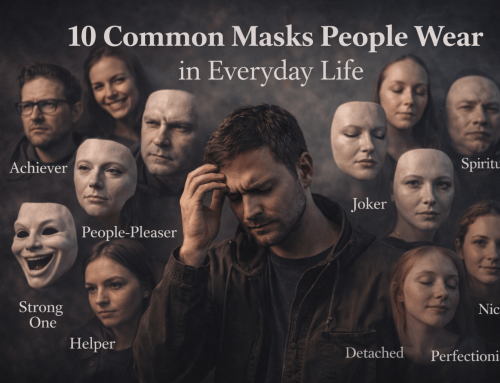
The roles we have lived inside for years begin to feel heavy, false, or strangely empty.
This can be deeply unsettling.
Many people describe it like this:
“I don’t know who I am anymore.”
“I feel lost.”
“I feel disconnected from myself.”
“The life I built no longer feels like me.”
“I can function, but something feels missing.”
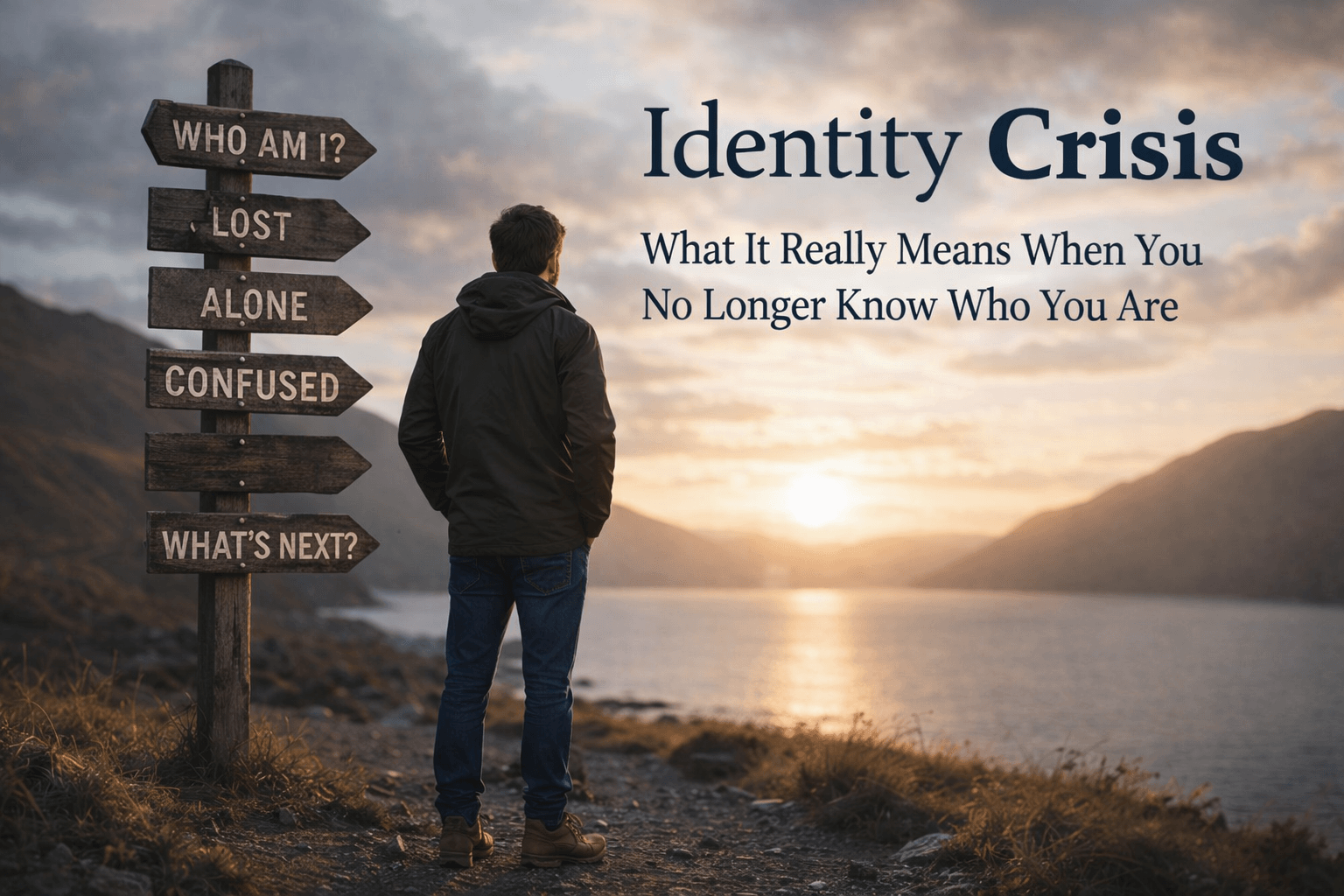
This is often called an identity crisis.
And although it can feel frightening, it is not always a sign that something has gone wrong.
Sometimes it is a sign that something deeper is trying to change.
What is an identity crisis?
An identity crisis happens when the identity you have been living from no longer feels stable, true, or sufficient.
It may be the identity built around:
- your job
- your role in the family
- being needed
- success
- achievement
- pleasing others
- being strong
- being responsible
- holding everything together
For years, that identity may have helped you function.
It may even have helped you survive.
But when it begins to loosen, crack, or stop fitting, you can feel like you are losing your footing.
That is why an identity crisis can feel so personal.
It is not just that life is changing.
It is that the self you have been using to live life may no longer fit who you are becoming.
Why identity crisis feels so painful
Identity gives us a sense of:
- continuity
- meaning
- direction
- self-recognition
- belonging
- internal stability
So when identity starts to shift, it can feel like the ground beneath you is moving.
You may still be doing the same things externally.
You may still be going to work.
Speaking to the same people.
Living in the same house.
Managing the same responsibilities.
But inwardly, something feels different.
You may feel:
- confused
- emotionally flat
- restless
- more sensitive than usual
- disconnected from old goals
- tired of pretending
- uncertain what matters now
- unable to return to the old version of yourself
This is why identity crisis can feel so strange.
It is not always dramatic on the outside.
Sometimes it is a quiet inner dislocation.
Identity crisis is often misunderstood
People often think identity crisis means weakness, instability, or emotional failure.
But very often, it is something else.
It may mean that the identity you built to function in one stage of life is no longer deep enough, true enough, or alive enough for the stage you are entering now.
In that sense, identity crisis is not only collapse.
It can also be transition.
It can be the moment when an old self begins to loosen because a truer one is trying to emerge.
That does not make it easy.
But it does make it meaningful.
Common causes of identity crisis
Identity crisis can arise in many seasons of life.
It often appears during or after:
- leaving a job or career
- retirement
- divorce or relationship breakdown
- burnout
- illness
- grief or loss
- children leaving home
- spiritual awakening
- success that feels unexpectedly empty
- major life transition
- midlife reflection
What these experiences have in common is that they disturb the structure of the old self.
They expose how much identity may have been built around:
- function
- routine
- role
- external validation
- usefulness
- performance
- survival
When those structures begin to shift, the question beneath them begins to surface:
Who am I now?
Signs you may be in an identity crisis
Identity crisis does not always look dramatic.
Sometimes it looks like a person who is still functioning, but no longer feels connected to the life they are living.
You may be in an identity crisis if:
- you no longer recognise yourself in the way you used to
- your old goals no longer motivate you
- success feels strangely empty
- the roles you used to play feel heavy or false
- you feel disconnected from your own life
- you keep asking deeper questions about who you are
- you sense that the old version of you is fading
- you are less willing to perform or pretend
- you feel called toward something more honest, but cannot yet name it
None of these automatically mean something is wrong.
They may mean something real is changing.
The old identity may have protected you
This is an important part of the picture.
Old identities are not usually random.
They often formed for good reasons.
They may have helped you:
- be accepted
- stay safe
- earn approval
- avoid rejection
- survive difficulty
- keep life stable
- become successful
- feel needed
- manage chaos
That means identity crisis is not usually about suddenly becoming broken.
It is often about outgrowing a self that once helped you, but can no longer carry your deeper life.
This is why compassion matters here.
If you are in an identity crisis, you do not need harshness.
You need honesty.
And space.
And a gentler way of seeing what is happening.
Why trying harder usually does not fix it
When people begin to feel lost, they often try to solve it by pushing harder.
They look for:
- more motivation
- a new plan
- a fresh goal
- a productivity system
- a new identity to perform quickly
But identity crisis is usually not solved by building another surface layer too fast.
Because the deeper issue is not only:
What should I do next?
It is:
- Who have I been being?
- What identity have I been living from?
- What no longer feels true?
- What am I outgrowing?
- What is trying to emerge now?
This is why identity crisis can become a doorway rather than just a breakdown.
How the Identity Awakening System helps
The Identity Awakening System (IAS) was created for exactly this kind of moment.
It helps people look beneath the surface of their confusion, disorientation, or life transition and begin to understand the identity underneath it.
Instead of forcing reinvention, IAS helps you gently explore:
- the identity you have been living from
- the roles that became too central
- the beliefs shaping your self-image
- the patterns you return to under pressure
- the values that feel most true now
- the identity that may be emerging underneath the old one
This is important because identity crisis is not only about loss.
It is also about revelation.
It is about seeing more honestly:
- what was built from conditioning
- what was built from fear
- what was built from survival
- and what may be more true beneath all of that
IAS helps make that process clearer, gentler, and more conscious.
You do not need to rush into a new identity
One of the hardest parts of identity crisis is the pressure to get answers quickly.
But real identity change rarely happens through force.
It happens through:
- reflection
- noticing
- loosening old roles
- allowing discomfort
- becoming more honest
- listening for what feels true
- taking the next small step
You do not need to invent a polished new self overnight.
You do not need to panic just because the old one no longer fits.
Often the wiser path is slower.
Not passive.
But slower.
More truthful.
More grounded.
A compassionate reframe
If you are moving through an identity crisis, it may help to remember this:
You may not be losing yourself.
You may be losing an identity that was never the whole of you.
That is painful.
But it is also important.
Because when the false, outdated, or overly narrow identity begins to loosen, life can start becoming more real.
More aligned.
More alive.
Closing
Identity crisis can feel lonely, confusing, and disorienting.
But it may also be the beginning of a more honest life.
Not because all the answers arrive at once.
But because the old answers no longer satisfy.
If you are in that place, the Identity Awakening System offers a gentle way to begin understanding what is changing, what no longer fits, and who you may really be beneath the old identity.
Not with force.
Not with performance.
But with truth.
Explore the Identity Awakening System