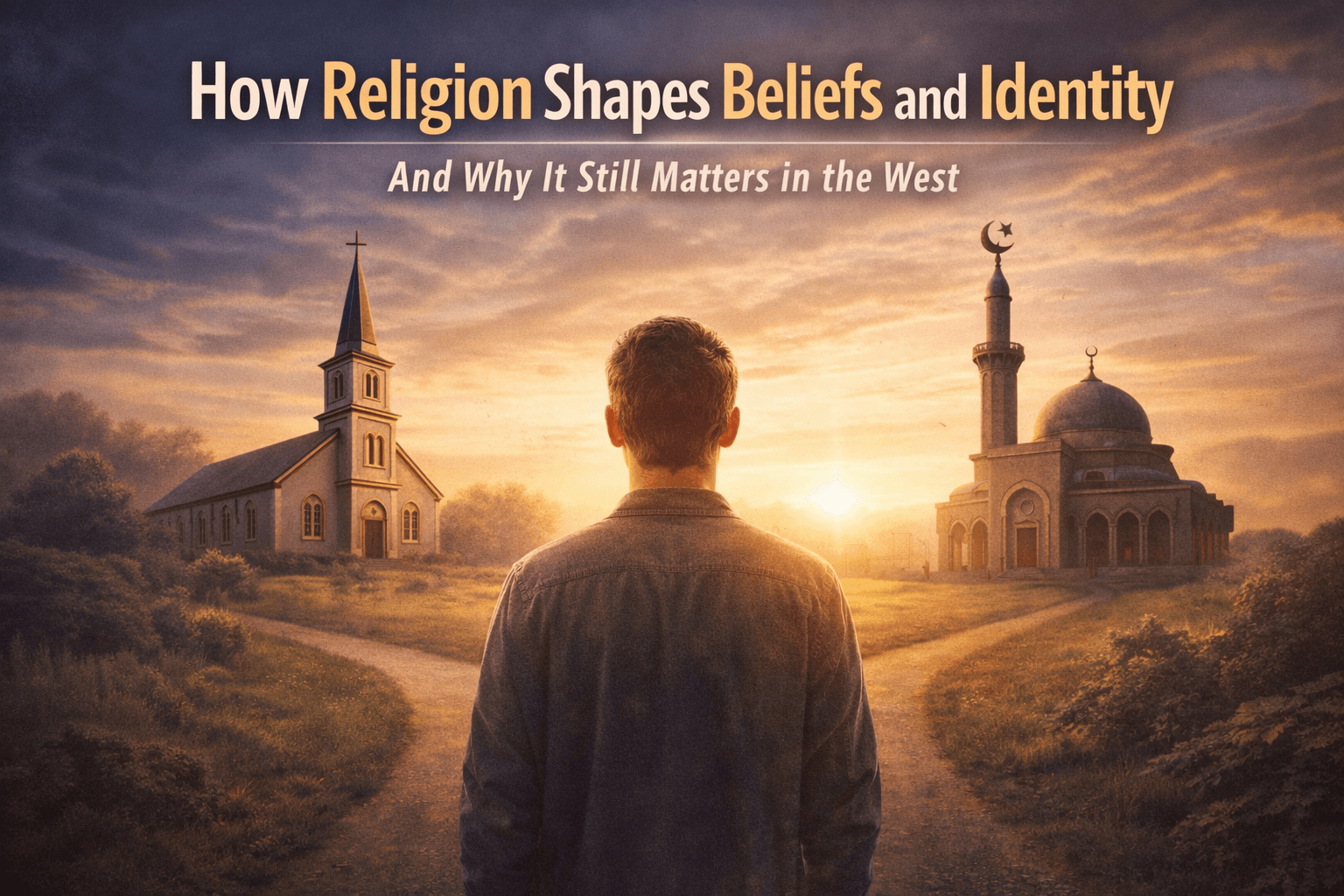
Religion has always shaped more than private belief.
It shapes identity.
Community.
Morality.
Belonging.
Meaning.
Authority.
Family life.
Ideas about truth.
Ideas about right and wrong.
Ideas about who “we” are.
That is why religion matters so deeply in identity work.
Because religion does not only tell people what to believe about God.
It often helps shape what they believe about:
- themselves
- other people
- family
- sex
- duty
- authority
- guilt
- salvation
- belonging
- outsiders
- truth itself
For many people, religion is not just a belief system.
It is an identity system.
Religion forms identity early
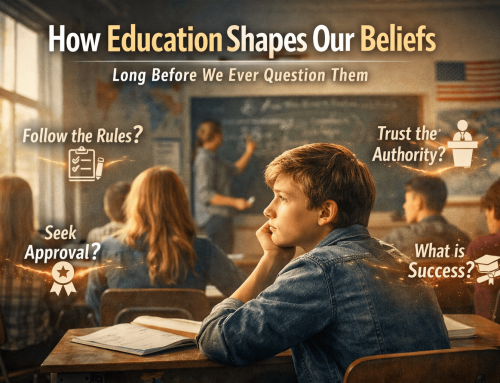
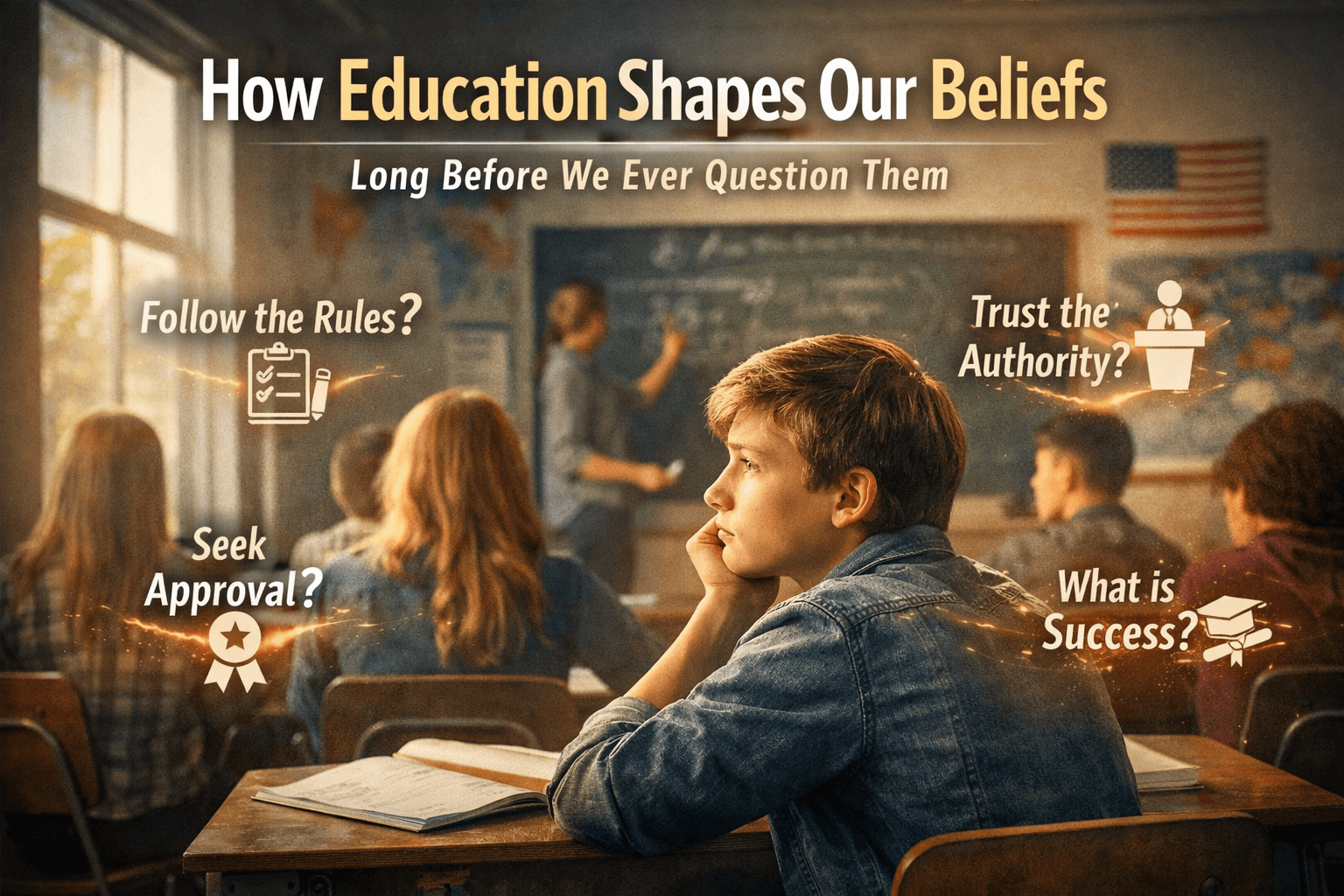
Like family and education, religion often enters very early.
A child does not usually choose it through deep investigation.
They inherit it.
They inherit:
- stories
- rituals
- assumptions
- symbols
- moral language
- ideas of purity and danger
- ideas of good and evil
- ideas of obedience and rebellion
- ideas of heaven, hell, reward, punishment, and destiny
These things can sink in very deeply.
Especially when they are repeated by:
- parents
- grandparents
- teachers
- clergy
- community leaders
- trusted adults
- the wider culture
That is why religion can shape a person long before they ever consciously examine it.
Religion gives people a ready-made world
One reason religion is so powerful is that it offers a complete frame.
It answers:
- Where did I come from?
- Why am I here?
- What is right?
- What is wrong?
- Who belongs?
- What must I obey?
- What happens if I don’t?
- What gives life meaning?
- What happens after death?
Few things shape identity more strongly than a system that answers all of those questions.
This is why religion can bring:
- comfort
- order
- moral structure
- community
- hope
- continuity
- purpose
But it can also create deep difficulty when:
- questioning is discouraged
- authority becomes absolute
- belonging depends on conformity
- fear is attached to disagreement
- identity fuses too tightly with doctrine
Religion is never only personal
Modern Western culture often talks about religion as if it is only private.
But in reality, religion often shapes:
- family roles
- gender expectations
- community norms
- public values
- political instincts
- legal debates
- attitudes to education
- attitudes to free speech
- attitudes to outsiders
That is why religion still matters so much in Europe and the UK.
This is not only because of private spirituality.
It is because religion affects the deeper question of:
What kind of society are we trying to be?
Why this feels especially relevant now
Across Britain and Europe, religion is no longer something many people experience as culturally invisible.
Demographic change, migration, secularisation, and public debate have made questions of religion, integration, and national identity more visible again. In England and Wales, the 2021 Census recorded Christianity as the largest religion but also showed a decline in the Christian share of the population compared with 2011, while Muslims were one of the youngest religious groups by median age.
That means many people are now asking questions like:
- What happens when different religious worldviews live side by side?
- Can a society stay coherent without shared foundations?
- What should be protected in a liberal democracy?
- Where is the line between religious freedom and parallel norms?
- What happens when inherited national identity becomes less certain?
These are real questions.
And many people feel them before they know how to speak about them.
Britain’s older identity and its newer questions
Britain has long been shaped by Christian inheritance, alongside secular law, Enlightenment ideas, parliamentary tradition, and modern pluralism. At the same time, the UK is now more religiously mixed, and the state has had to think carefully about how different faith communities fit within one legal and civic framework.
This is where some public anxiety comes from.
Not always from hatred.
Sometimes from confusion.
Sometimes from rapid cultural change.
Sometimes from a sense that people no longer know:
- what the shared centre is
- what values hold a society together
- what can be questioned
- what must remain common
When people feel that uncertainty, identity questions become sharper.
Why Islam is part of this debate
In the West, Islam is often discussed not only as a religion but as a civilisational question.
That is partly because Islam is visible:
- in dress
- in prayer
- in community practice
- in law-related discussions
- in debates about school life, gender, speech, and public values
In England and Wales, public debate has included scrutiny of sharia councils. A UK government-commissioned independent review said it was examining whether and to what extent the application of sharia law by sharia councils may be incompatible with the law of England and Wales, and whether misuse could discriminate against certain groups or cause social harm.
That does not mean every Muslim seeks the same thing.
Nor does it justify treating Muslims as a monolith.
But it does mean that questions around Islam, law, integration, and national identity have become part of a much wider debate about belief and belonging in the West.
Religion shapes identity by creating loyalty
One of the strongest things religion does is create loyalty.
It can create loyalty to:
- a sacred story
- a moral code
- a people
- a text
- a clergy
- a historical memory
- a vision of truth
- a shared suffering
- a promised future
This loyalty can be beautiful.
It can produce:
- devotion
- sacrifice
- service
- courage
- resilience
- community care
But loyalty can also become dangerous when it closes the door to inquiry.
When loyalty says:
- do not question
- do not doubt
- do not examine
- do not compare
- do not look outside the frame
- do not betray the group
At that point, belief stops being freely held.
It starts becoming identity armour.
Religion can give meaning — and also fear
This is why religion is so powerful.
It often touches the deepest human needs:
- meaning
- belonging
- order
- transcendence
- moral clarity
- identity
- hope in suffering
But because it reaches so deep, it can also carry:
- fear of exclusion
- fear of punishment
- fear of shame
- fear of questioning
- fear of being wrong
- fear of leaving the group
- fear of betraying family or tradition
That means religion can shape a person not only through beauty and truth, but also through fear and emotional conditioning.
And when that happens, people may defend beliefs not because they have examined them, but because the beliefs are holding together their identity, family bonds, and sense of reality.
Why people rarely question inherited religion easily
Many people assume religious belief is simply chosen.
But often it is inherited before it is chosen.
And once inherited, it becomes tied to:
- family loyalty
- culture
- memory
- morality
- community
- identity
- safety
- belonging
That is why questioning religion can feel so destabilising.
It is not only:
Do I still believe this?
It can also feel like:
- Who am I if I don’t?
- Will I lose my people?
- Will I become rootless?
- What happens to my identity if this structure breaks?
- What if I question and there is nothing underneath?
Those are not small questions.
They are identity questions.
The deeper issue is not religion alone
The deeper issue is how any powerful belief system shapes the self.
Religion is one of the strongest examples because it often claims:
- ultimate truth
- moral authority
- spiritual consequence
- group belonging
- a total frame for life
That makes it a major force in identity formation.
But the real question is not simply:
Is religion good or bad?
The real questions are:
- What has religion taught me about who I am?
- What fears has it attached to truth?
- What values has it given me that still feel alive?
- What parts of it were beautiful?
- What parts of it were control?
- What belongs to my essence and what belongs to conditioning?
That is where awakening begins.
How to approach this without hatred
This is important.
If we are not careful, questions about religion can quickly become tribal, reactive, or dehumanising.
That helps no one.
The wiser path is to stay grounded and ask:
- What belief system is operating here?
- How does it shape identity?
- What kind of loyalty does it demand?
- How does it treat questioning?
- How does it shape views of authority, gender, outsiders, and truth?
- What happens when it meets a different civilisation or legal framework?
These questions can be asked clearly without hatred.
Discernment is not the same as hostility.
And compassion is not the same as naivety.
Why this matters for Identity Awakening System (IAS)
The Identity Awakening System helps people recognise what they inherited long before they consciously chose it.
That includes:
- family beliefs
- educational conditioning
- cultural narratives
- political assumptions
- religious frameworks
IAS helps ask:
- What beliefs did I inherit from religion?
- What role did faith play in shaping my identity?
- What fears or loyalties still live in me?
- What still feels true?
- What no longer feels true?
- What belongs to essence and what belongs to programming?
This is not about mocking faith.
It is about seeing clearly.
Because if religion shaped your identity before you could examine it, awakening includes the right to look again.
A gentler truth
Religion can nourish the soul.
It can also shape identity so deeply that people forget where faith ends and conditioning begins.
That is why this topic matters now.
Not only because Europe and the UK are changing.
But because many people are being forced to ask again:
- What do I believe?
- What kind of civilisation do I want to live in?
- What values are non-negotiable?
- What have I inherited without ever fully examining?
- What truth still stands when fear, tribe, and pressure are stripped away?
Those are the right questions.
And they are identity questions.
A distinction that matters: concern about policy is not hatred of people
It is important to make a distinction here.
Concern about immigration policy is not the same as hatred toward immigrants.
Concern about cultural change is not automatically hostility toward another religion.
Concern about the future of one’s country is not the same as attacking an entire group of people.
I know this from personal experience.
I lived in Kuwait (a Muslim country) for 13 years during my childhood, and the Kuwaiti people were fair to my family. They treated us well, and I have respect for the way that country approached immigration. What stood out to me was that their policies were clearly designed around the long-term benefit of their own citizens. They did not casually hand out citizenship to foreigners. They expected immigrants to contribute, to add value, to be paid fairly, and in many cases to return to their own country rather than permanently reshape the host nation.
That approach may not suit every society in exactly the same way, but it does reveal an important principle:
a government has a duty to run immigration policy for the benefit, continuity, and stability of its own people.
This is where many people in Britain now feel betrayed.
The concern is not simply that newcomers exist. The deeper concern is that large-scale migration has been managed without honesty, consent, clear limits, or proper regard for the indigenous population, their culture, their cohesion, and their future. When people feel that policy is being made over their heads, while they are expected to remain silent or be shamed for raising concerns, resentment grows quickly.
A healthy immigration system should be:
- fair to newcomers
- fair to citizens
- clear in its expectations
- honest about its costs
- honest about its cultural effects
- rooted in the long-term well-being of the nation
When those principles are missing, the issue becomes more than economics or administration. It becomes an identity issue. People begin to feel that their country is no longer being governed on their behalf, and that their history, traditions, and social stability are treated as less important than political image, ideology, or elite interests.
That is why this subject feels so emotionally charged for many people.
At root, it is not only about migration.
It is about trust, belonging, continuity, and whether a people still feel that their homeland is being shaped with them in mind.
Closing
Religion shapes beliefs because it shapes meaning, belonging, morality, and authority all at once.
That makes it one of the strongest forces in identity formation.
And in a time of demographic change, migration, secular uncertainty, and cultural tension, these questions are becoming visible again in the West.
That does not mean the answer is hatred.
It means the answer is deeper clarity.
Because until we understand how religion shapes belief and identity, we may keep confusing inherited frameworks with conscious truth.
Awakening begins when we become willing to look again.