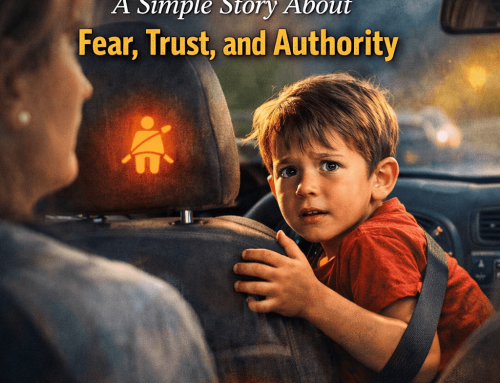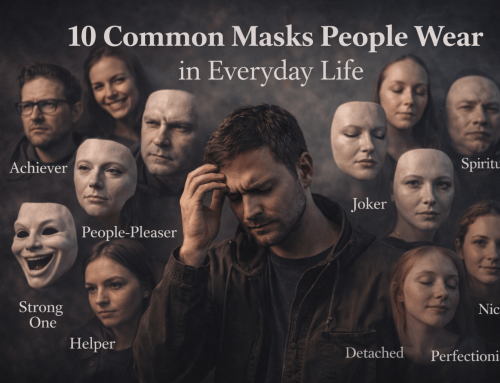
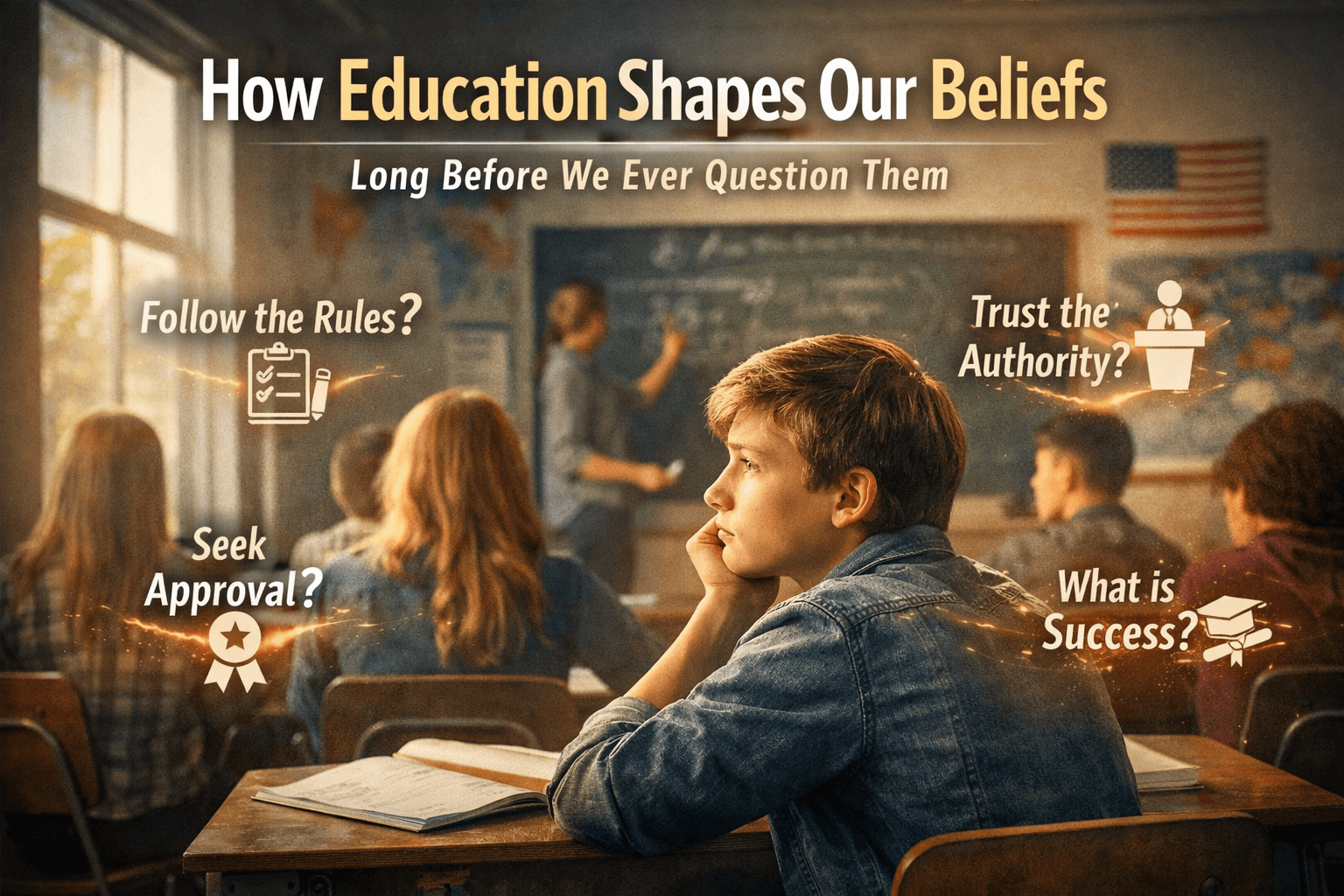
School teaches far more than facts. It shapes beliefs about authority, success, intelligence, and self-worth long before we ever question them.
Most people think education is mainly about learning facts.
Reading.
Writing.
Numbers.
History.
Science.
Qualifications.
Skills.
And of course, education does involve those things.
But education also teaches something deeper.
It teaches us:
- what to believe
- what is considered true
- what is acceptable to question
- who is allowed to decide meaning
- how to relate to authority
- how to see ourselves in the world
That is why education matters so much in identity work.
Because school does not only teach subjects.
It also helps shape the beliefs we later mistake for our own.
Education shapes more than knowledge
From an early age, children enter a system that teaches far more than information.
They learn:
- when to speak
- when to stay quiet
- what gets rewarded
- what gets corrected
- what counts as success
- what kind of intelligence is valued
- what kind of behaviour is acceptable
- what kind of questions are welcomed
- what kind of thinking is inconvenient
All of this leaves a mark.
Not always dramatically.
But deeply.
Because repeated experiences inside education begin to shape a child’s relationship with:
- truth
- performance
- authority
- belonging
- self-worth
- comparison
- failure
- obedience
- independent thought
This is why education is never neutral.
It always shapes belief.
Children do not just learn content — they learn how reality works
This is one of the most important things to understand.
A child in school is not only learning facts.
They are also learning what reality feels like.
They are learning whether:
- authority is to be trusted automatically
- questioning is safe
- fitting in matters more than truth
- being correct matters more than being curious
- approval matters more than honesty
- performance matters more than depth
- memorising matters more than thinking
If those lessons are repeated often enough, they do not remain external.
They become internal beliefs.
Beliefs such as:
- I must get it right to be valued
- I should not challenge the official answer
- success means meeting external standards
- my worth depends on performance
- it is safer to conform than to question
- being different may cost me belonging
Those beliefs then follow people into adulthood.
Education often rewards compliance before discernment
Many children learn very early that school rewards compliance.
Sit still.
Pay attention.
Do as you are told.
Give the expected answer.
Stay within the task.
Do not disrupt the structure.
Again, some structure is necessary.
But when compliance becomes the main pathway to approval, something deeper can happen.
The child may begin to learn that:
- authority should not be challenged
- the safe answer is better than the true one
- fitting the system matters more than inner knowing
- questioning too much is risky
- being manageable is more valuable than being awake
This does not happen in every classroom in the same way.
But as a wider pattern, education often trains adaptation to systems long before it trains inner authority.
That matters.
Because later in life, many adults still feel uneasy questioning anything presented as official, expert, or institutional.
Education teaches comparison very early
Another powerful belief-forming force in education is comparison.
Children are compared through:
- grades
- rankings
- praise
- correction
- performance
- behaviour
- pace
- achievement
- external standards
This can quietly teach a child to see themselves through measurement rather than essence.
Instead of asking:
- What am I naturally like?
- What interests me?
- How do I think?
- What is alive in me?
they begin learning to ask:
- Am I ahead or behind?
- Am I good enough?
- How do I compare?
- What do I need to do to be approved?
- What score defines me?
Over time, this can create beliefs like:
- I am only valuable when I perform
- I must prove myself
- I am behind
- I am not intelligent in the right way
- other people matter more than my own way of learning
This is not a small thing.
It becomes identity.
Education can narrow what counts as intelligence
Many people leave school carrying a hidden wound:
I am not intelligent.
But often what they really mean is:
I did not fit the kind of intelligence the system most rewarded.
Education often privileges certain forms of thinking:
- memory
- speed
- verbal fluency
- structured analysis
- test performance
- sitting still and focusing in conventional ways
But human intelligence is much broader than that.
There is also:
- intuition
- creativity
- emotional intelligence
- pattern recognition
- embodied knowing
- relational awareness
- practical wisdom
- spiritual sensitivity
- original thinking
When these qualities are not recognised, a person can come away believing they are less capable than they truly are.
This belief may follow them for decades.
Education shapes our beliefs about authority
One of the deepest roles education plays is in shaping our relationship with authority.
A child learns early:
- who is allowed to speak with certainty
- whose version of reality counts
- what happens when you disagree
- whether questioning is welcomed or punished
- whether truth is discovered or delivered
If education teaches children mainly to receive approved knowledge rather than wrestle with truth for themselves, then many will grow into adults who still feel that reality comes from outside them.
That has enormous consequences.
Because later, they may relate to:
- media
- government
- institutions
- experts
- corporate systems
- public narratives
in the same way they were taught to relate to teachers and textbooks.
Not always consciously.
But deeply.
This does not mean all education is bad
It is important to be balanced here.
Education can also be beautiful.
A great teacher can awaken curiosity.
A wise school environment can nurture thinking.
Learning can expand the mind and the soul.
Knowledge can liberate.
So this is not an argument against learning.
It is an invitation to see that education always carries values, assumptions, and methods that shape belief.
The issue is not learning itself.
The issue is whether education helps people become:
- more awake
- more curious
- more discerning
- more capable of independent thought
- more connected to truth
or whether it mainly trains them to become:
- manageable
- measurable
- conforming
- externally defined
That is the deeper question.
What many adults are really unlearning
Many adults who begin awakening are not only learning new things.
They are unlearning what school trained into them.
They are beginning to question beliefs like:
- the official version is always safest
- success means fitting the system
- intelligence looks one particular way
- external approval defines value
- questioning authority is dangerous
- being correct matters more than being real
- learning is about repeating what is already accepted
This can feel unsettling at first.
Because school-based beliefs often form very early.
They can feel like reality itself.
But many of them are not truth.
They are conditioning.
This is why education matters in identity work
Identity is shaped not only by family, but by systems.
And education is one of the first major systems most people enter.
It teaches not only what to know, but how to be.
That means many parts of adult identity were shaped in school, including beliefs about:
- worth
- intelligence
- obedience
- success
- failure
- authority
- belonging
- questioning
- expression
This is why identity awakening often includes looking back and asking:
- What did school teach me about myself?
- What did I learn about authority?
- What did I learn about success?
- What kind of intelligence was rewarded?
- What parts of me were encouraged?
- What parts of me were ignored or suppressed?
- Which beliefs from that time am I still living from now?
These are powerful questions.
Because they help separate what is truly you from what was installed through conditioning.
How Identity Awakening System (IAS) helps
The Identity Awakening System helps people see which beliefs were inherited from systems they entered long before they could consciously choose.
That includes:
- family
- school
- culture
- media
- work
- authority structures
IAS helps you ask:
- What beliefs did education shape in me?
- What have I mistaken for truth because it was repeated early?
- What parts of my identity were rewarded by the system?
- What parts of me became hidden in order to succeed?
- What still feels true?
- What no longer fits?
This matters because awakening is not only about discovering something new.
It is also about recognising what was built into you before you had language for it.
And once you begin to see that, you can start choosing more consciously.
A gentler truth
Most people do not realise how deeply education shaped them.
They think school ended years ago.
But many of its beliefs continue living inside them.
In how they work.
In how they judge themselves.
In how they respond to authority.
In how afraid they are to get things wrong.
In how much they still seek permission.
In how much they doubt their own knowing.
That is why this matters.
Because the classroom may be gone.
But the beliefs it formed can still be shaping identity.
Closing
Education teaches far more than facts.
It teaches what to believe, what to fear, what to trust, what to repeat, and often what not to question.
That is why it plays such a powerful role in shaping identity.
The good news is that what was learned can also be examined.
And what was installed can be seen.
And what was mistaken for truth can be questioned.
That is where freedom begins.
Not in rejecting all education.
But in becoming conscious of what it taught you about yourself, authority, and reality — and deciding what is actually true now.