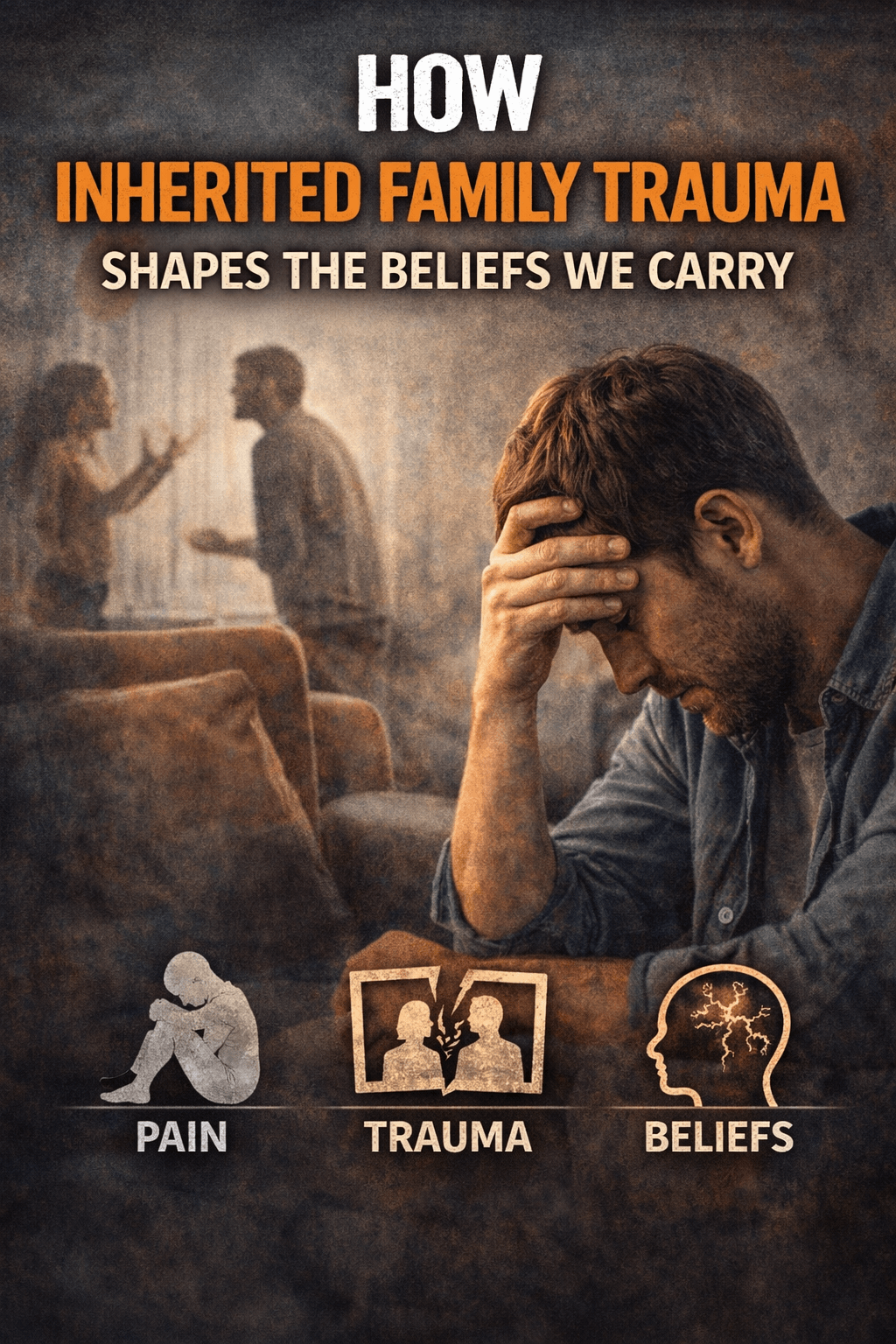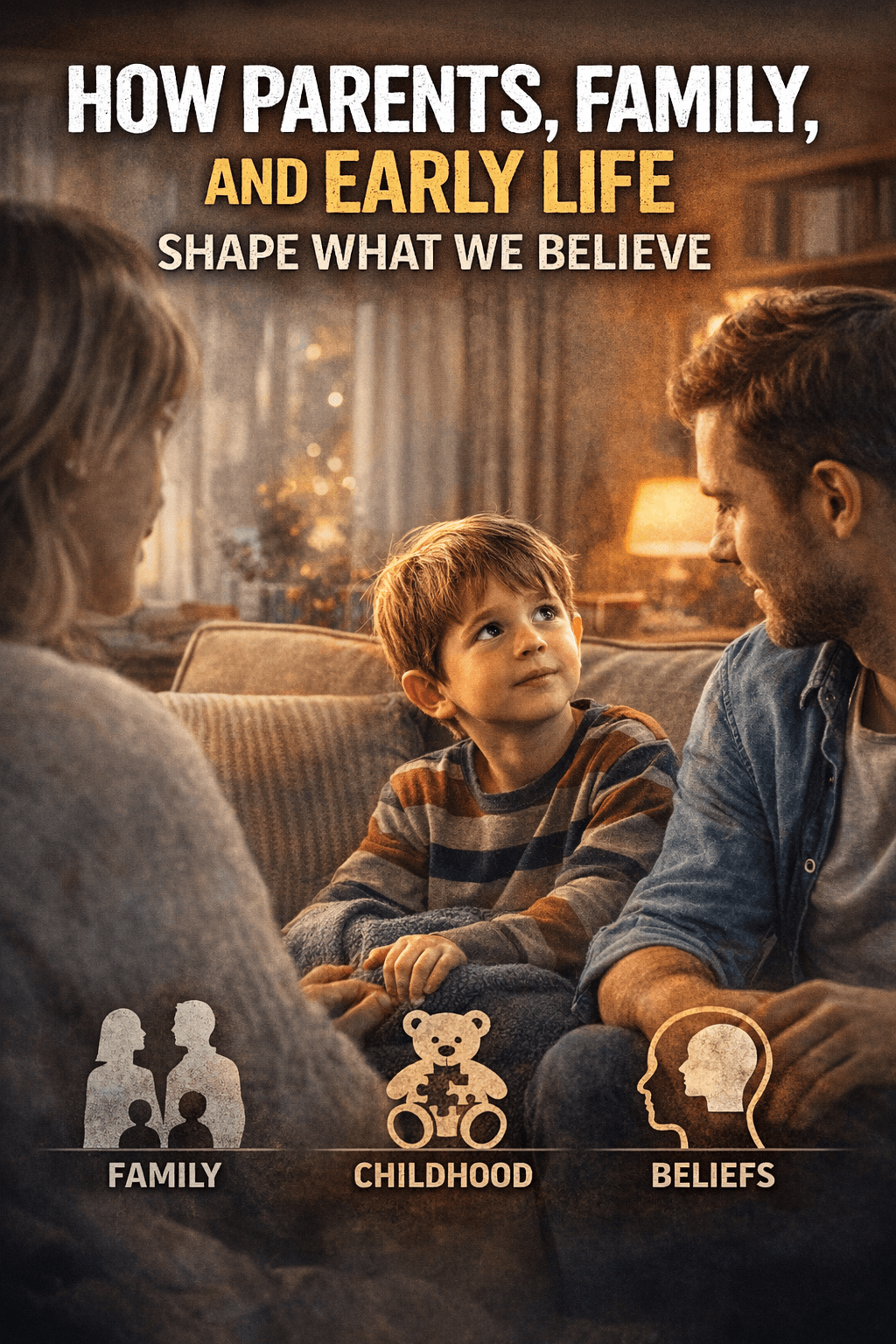
Beliefs often form much more simply than people realise.
They do not always arise from deep study.
They do not always come from personal investigation.
They do not always come from direct experience.
Very often, a belief begins like this:
Someone we trust tells us something.
We accept it.
We feel it.
And then it becomes real inside us.
That is how belief works.
And once a belief becomes emotionally real, it can shape behaviour very quickly.
A simple story about belief
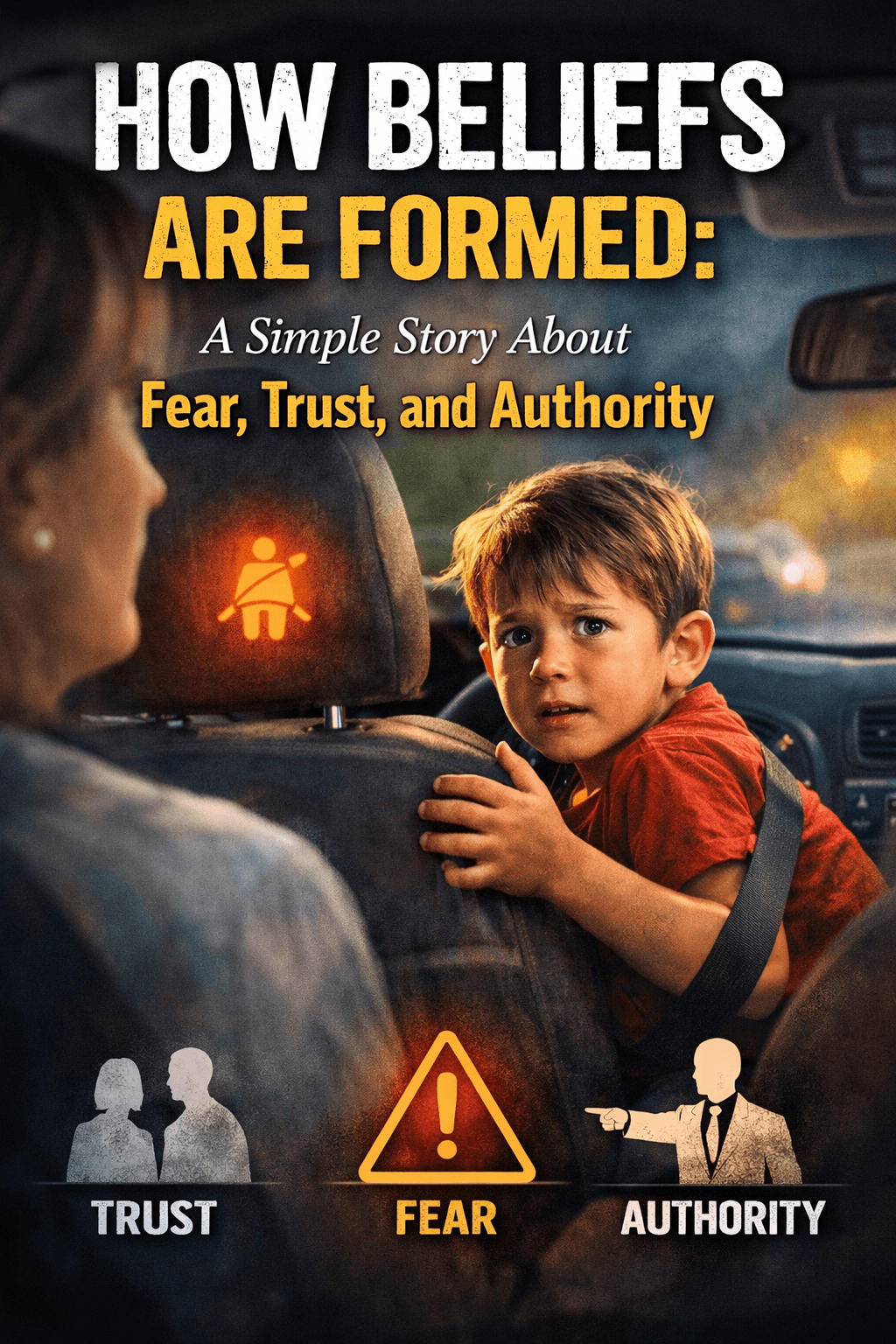
I was driving with my grandson sitting next to me in the front seat when the car broke down.
A warning light came on for the seatbelt system.
The moment I mentioned it, all hell broke loose.
He scrambled quickly into the back seat in fear.
Later I discovered why.
My daughter, his mother, had told him he should sit in the back because the airbag was dangerous for children in the front seat. That had become a real belief for him. (It was simply a way to get him to sit in the back of the car for her.) So when the warning light came on, his system reacted as though danger was immediately present.
My daughter found it funny when I told her.
But it was not funny to him.
To him, it was real.
That is how beliefs work.
A trusted authority says something.
The mind accepts it.
The body stores it.
And later, an event activates it.
The belief is no longer just an idea.
It has become fear, behaviour, and reality inside the person.
Beliefs are not just thoughts
This is one of the most important things to understand.
A belief is not just a sentence in the mind.
A belief becomes:
- a lens
- a filter
- a meaning-maker
- an emotional trigger
- a behavioural guide
- a part of identity
Once we believe something strongly enough, we do not simply “have” the belief.
We begin to live from it.
We interpret through it.
React through it.
Protect it.
Sometimes even build our identity around it.
That is why beliefs matter so much.
Belief often begins with trust
Children do not begin life by carefully evaluating evidence.
They begin life by trusting. Trusting that Father Christmas is real.
They trust:
- parents
- family
- teachers
- authority figures
- the emotional tone around them
That is natural.
It is how human beings learn.
But it also means that many beliefs are formed before a person has any real ability to question them.
If a child is told:
- the world is dangerous
- people cannot be trusted
- you must always be good
- money is scarce
- authority knows best
- you should never question
- your role is to obey
- your feelings are not valid
those ideas can sink in deeply.
Not always as conscious thoughts.
But as the atmosphere of identity.
Fear makes belief stronger
My grandson’s story shows something else important.
Belief becomes especially powerful when it is tied to fear.
When fear attaches to an idea, the nervous system remembers it.
Then later, something small can activate the whole belief structure.
A sound.
A warning light.
A tone of voice.
A headline.
An expert speaking confidently.
A phrase repeated again and again.
That is why fear is such a powerful carrier of belief.
Fear tells the body:
This matters. Remember this. React quickly.
And once that happens, questioning becomes harder.
Because the belief is no longer only mental.
It has become protective.
Authority shapes belief faster than truth does
This is uncomfortable to admit, but very often people believe things first because of who said them, not because they have carefully examined whether they are true.
Authority carries weight.
If something comes from:
- a parent
- a doctor
- a teacher
- a government
- a newsreader
- an institution
- a boss
- a professional body
- a widely accepted system
many people absorb it automatically.
Again, this does not make them foolish.
It makes them human.
We are social beings.
We are wired to orient around trusted sources.
But the problem begins when trust replaces inquiry.
When authority becomes stronger than discernment.
When people stop asking:
- Is this true?
- How do I know?
- What is the evidence?
- What assumptions am I inheriting?
- What fear is shaping my reaction?
- Who benefits if I believe this?
That is where identity begins to be shaped from the outside in.
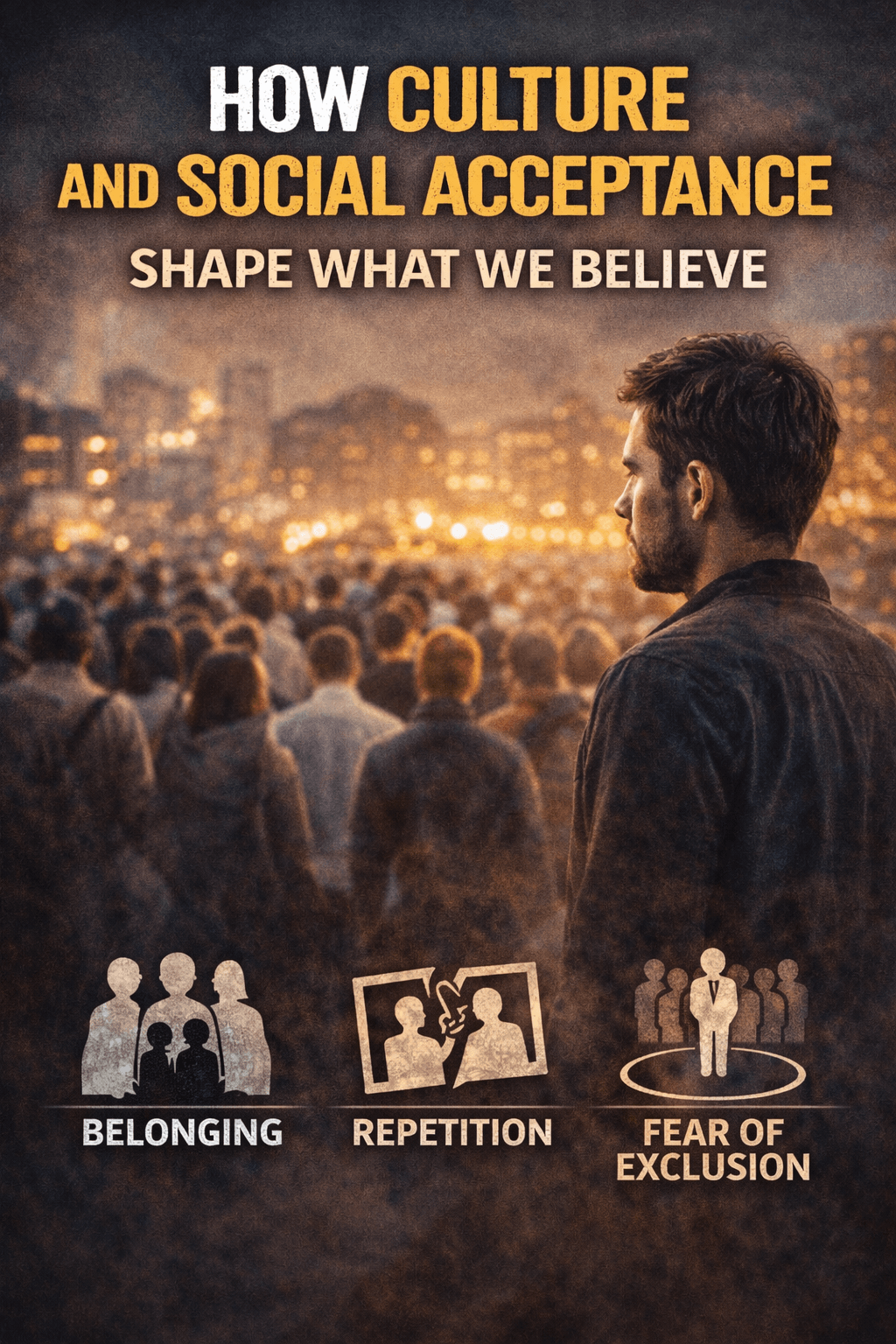
Repetition turns belief into reality
Belief is also formed through repetition.
If something is said often enough, especially by trusted voices, it starts to feel normal.
Then it starts to feel obvious.
Then it starts to feel true.
This is one of the quietest ways identity is shaped.
A person hears the same messages repeatedly:
- success means status
- school prepares you for life
- work determines your worth
- authority knows best
- fitting in matters more than truth
- productivity makes you valuable
- questioning is dangerous
- your role is to consume, comply, and cope
Over time, repetition makes these ideas feel natural.
But what feels normal is not always what is true.
Sometimes it is just what has been repeated most effectively.
Here is an example:
https://www.youtube.com/watch?v=FBpxDXmkwNk
Beliefs become part of identity
This is where the topic becomes deeply important.
Beliefs do not stay as isolated ideas.
They become identity.
A person may begin to think:
- I am the good one
- I am the achiever
- I am the responsible one
- I am not creative
- I am not safe unless I obey
- I am only valuable when I perform
- I must not question authority
- I must stay within what is acceptable
At that point, the belief is no longer just influencing behaviour.
It is helping define the self.
This is why changing belief can feel so threatening.
Because it is not only a matter of changing your mind.
It can feel like changing who you are.
Why people defend beliefs even when they are no longer true
Once a belief becomes part of identity, questioning it can feel deeply uncomfortable.
Not because the person is unintelligent.
But because the belief may be holding together:
- safety
- belonging
- certainty
- self-image
- social acceptance
- family loyalty
- emotional stability
If the belief cracks, something deeper may wobble.
That is why people often defend beliefs emotionally, even when evidence appears.
Because the real issue is not always the belief itself.
It is what the belief is holding in place.
This is how manipulation works
Manipulation becomes possible when people do not realise how beliefs are formed.
If belief can be shaped through:
- trust
- repetition
- fear
- authority
- social pressure
- emotional conditioning
then anyone who controls those forces can influence what people accept as reality.
That is why belief is not a small matter.
And that is why questioning matters.
Not so people become cynical.
Not so they reject everything.
But so they become more conscious of how their inner world is being shaped.
The real issue is not just what we believe
The deeper issue is this:
Who gave us the beliefs we now live from?
And:
Did we ever truly choose them?
This is the question beneath so much of life.
So many people are not living from examined truth.
They are living from inherited assumptions.
Inherited fears.
Inherited loyalties.
Inherited narratives.
Inherited roles.
Inherited identity.
And because those beliefs were installed early and repeated often, they feel like “me.”
But many of them are not the deepest truth of the person.
They are conditioning.
This is why Identity Awakening matters
The Identity Awakening System exists for exactly this kind of work.
It helps people begin to see:
- what they have been taught to believe
- what they inherited from family, school, media, systems, and culture
- what beliefs are shaping their identity now
- which ones feel truly theirs
- which ones no longer feel true
- how to begin reclaiming inner authority
This matters because awakening is not only about new ideas.
It is about becoming conscious of the beliefs already running your life.
It is about noticing that much of what feels like identity may actually be programming.
And once you see that, something powerful begins.
You begin to ask:
- What do I really believe?
- What was given to me?
- What was repeated into me?
- What was tied to fear?
- What feels true beneath all of that?
That is where inner freedom begins.
A gentler way to think about belief
We should be compassionate here.
Most people do not choose their beliefs in a deeply conscious way.
They inherit them.
Absorb them.
React from them.
Defend them.
Live inside them.
That includes all of us.
So this is not about feeling superior.
It is about becoming aware.
It is about seeing how belief enters, how it gets emotionally installed, and how it becomes part of identity.
My grandson was not silly.
He was responding to a belief that had become real to him.
And adults are often doing the same thing every day.
Only with much larger systems, much bigger fears, and much more socially reinforced narratives.
Closing
Beliefs are formed through trust, repetition, emotion, and authority long before most people ever question them.
That is why they can feel so real.
And that is why identity awakening matters so much.
Because until we see how our beliefs were formed, we may keep living from stories that were given to us rather than truths we have genuinely examined.
Awakening begins when we slow down and ask:
Is this really true?
How did I come to believe it?
And who might I be without it?
That is where freedom starts.