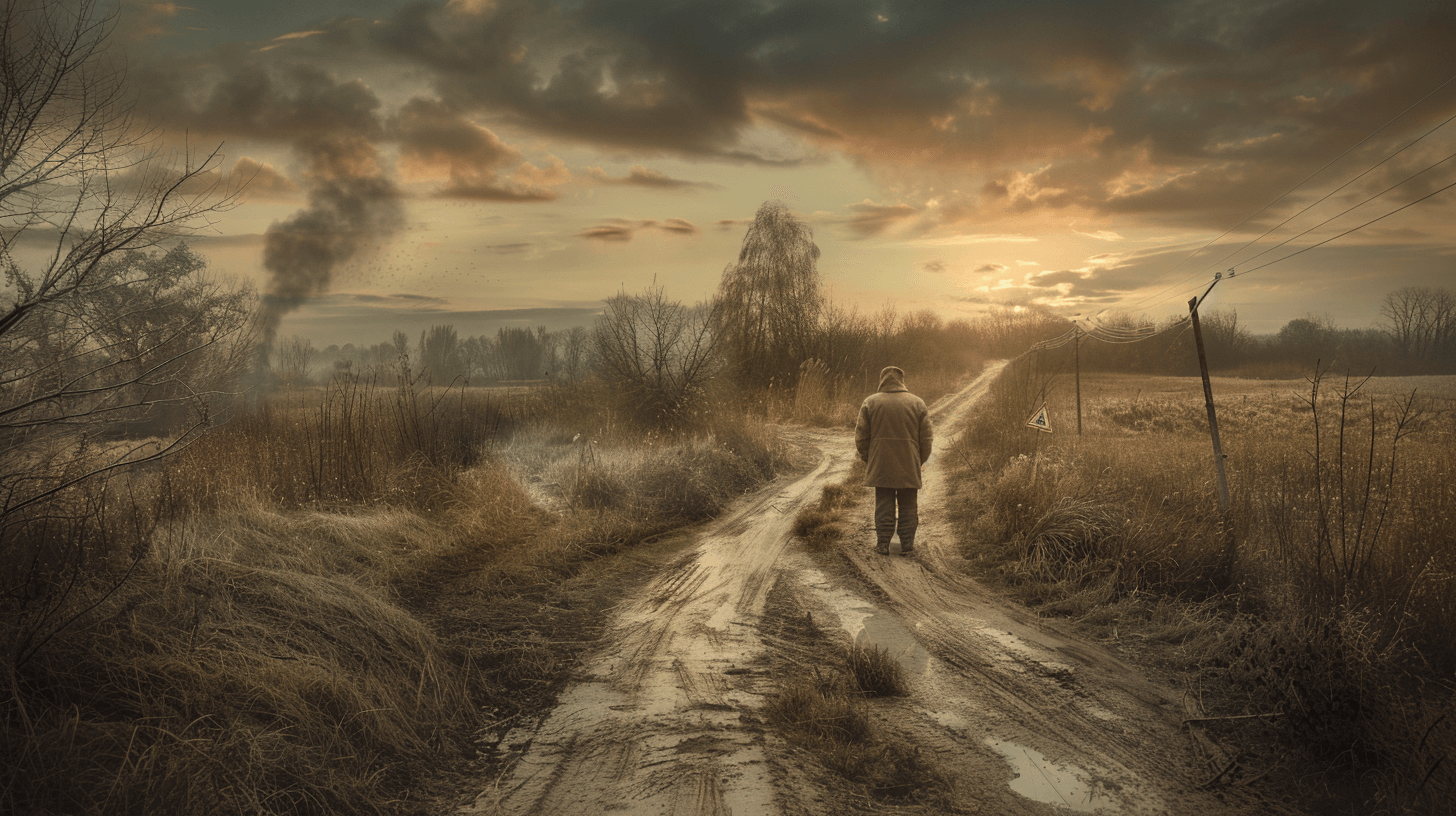
When the Old Map No Longer Matches the Terrain
I’m not here to convince anyone of anything.
I’m just noticing something —
and sharing it quietly, in case you’re noticing it too.
For a long time, we were told a simple story.
If you worked hard.
If you learned skills.
If you stayed adaptable.
If you kept building, creating, contributing.
Eventually, things would make sense.
Effort would compound.
The future would reward participation.
For some people, it did.
For many others, it didn’t.
Not because they failed.
Not because they lacked discipline, intelligence, or commitment.
But because the world they were preparing for
slowly stopped existing.
The Shift Didn’t Arrive as a Collapse
What’s strange is that this didn’t arrive with a single dramatic moment.
It arrived quietly.
Through small, unsettling recognitions.
You might be noticing things like this:
You open your banking app and realise that earning more hasn’t created more safety — just higher costs, tighter margins, and the feeling of constantly running to stand still.
You did what you were told. Worked. Saved. Adapted. Learned.
Yet the ground still feels unstable — as if the rules keep changing after you’ve already followed them.
Jobs no longer offer identity, only transactions.
Titles feel thinner. Loyalty feels outdated. Even “good roles” feel temporary.
You scroll past endless advice telling you to build, post, create, scale —
but something in you feels tired of performing for algorithms, trends, or attention that never quite translates into peace.
You may have skills, experience, even achievements —
yet feel oddly unmotivated, as if the old rewards no longer speak to you.
You sense AI, automation, and systems accelerating —
but no one has explained what a human life is meant to look like on the other side of that acceleration.
And perhaps the most unsettling thing of all:
You feel this even when your life looks fine from the outside.
That feeling isn’t a personal failure.
It’s a signal.
The Problem Isn’t Effort. It’s Orientation.
We’re moving through a transition where doing more doesn’t fix the problem.
Because the problem isn’t laziness.
It isn’t motivation.
It isn’t productivity.
It’s orientation.
Before you can decide what to build,
you need to know who you are when the old structures stop holding your weight.
Before you can trust the future,
you need to feel anchored in yourself — not in job titles, platforms, markets, or systems that can change overnight.
I’ve been sitting with that question for a long time now.
Not as a theory.
As lived experience.
Watching what happens when identity is tied too tightly to systems that quietly erode.
What I Found Wasn’t a Solution — It Was a Return
What I found wasn’t dramatic.
No breakthrough moment.
No grand plan.
It was something quieter.
A return to listening.
A slowing beneath the noise.
A re-orientation away from “What should I do next?”
and toward “What still feels true when everything else is uncertain?”
Not a belief system.
Not a productivity method.
Not a promise of outcomes.
Just a way of coming back into alignment
when the external world feels unstable.
I don’t think the next phase of life will be led by the loudest voices or the fastest movers.
I think it will be led by people who can stay grounded while others panic.
Who can choose without urgency.
Who can create — or simply live — without forcing.
If this resonates, you’re not broken.
You’re early.
If it doesn’t, that’s okay too.
This isn’t a call to action.
It’s a marker.
For those who sense the old map no longer matches the terrain —
and are quietly looking for a way to orient themselves again.
I’ll keep listening.
I’ll keep noticing.
And I’ll keep sharing, gently, as clarity emerges.
No rush.
No pressure.
Just truth, at human speed.
Why Knowing Who You Are Comes Before Building Anything
Before you decide what to build, you need to know who you are —
because everything you build carries the shape of the person building it.
If you don’t know who you are yet, a few things quietly happen.
You chase goals that look good but don’t actually fit you.
So even when you “win,” it feels hollow.
You build things you secretly resent maintaining.
What begins as excitement slowly becomes obligation.
You follow advice that works for other people — but drains you.
Then you assume the problem is your discipline, not the direction.
You mistake movement for progress.
You stay busy, but nothing settles.
And when the world shifts — when markets change, jobs disappear, rules move again —
everything you built starts to wobble, because it wasn’t anchored in you.
Knowing who you are isn’t about labels or personality types.
It’s about answering a few quiet questions before you commit years of your life to something:
What actually gives me energy instead of draining it?
What kinds of problems do I naturally care about?
What pace can I sustain without burning out?
What still matters to me when nobody is watching?
When you don’t answer those first,
you end up building someone else’s life.
When you do answer them, something changes.
Decisions simplify.
Comparison loosens its grip.
You stop forcing yourself into shapes that don’t fit.
And instead of asking,
“What should I build to survive?”
you begin asking,
“What feels true enough to build from?”
That shift is subtle —
but it’s the difference between:
• constantly starting over
• and finally building something that can last
You don’t need a grand vision.
You don’t need confidence.
You don’t even need clarity.
You just need to stop building
before you know who is doing the building.
I created Identity Awakening System to help us to remember who we are, so we can build from identity, rather than fear.