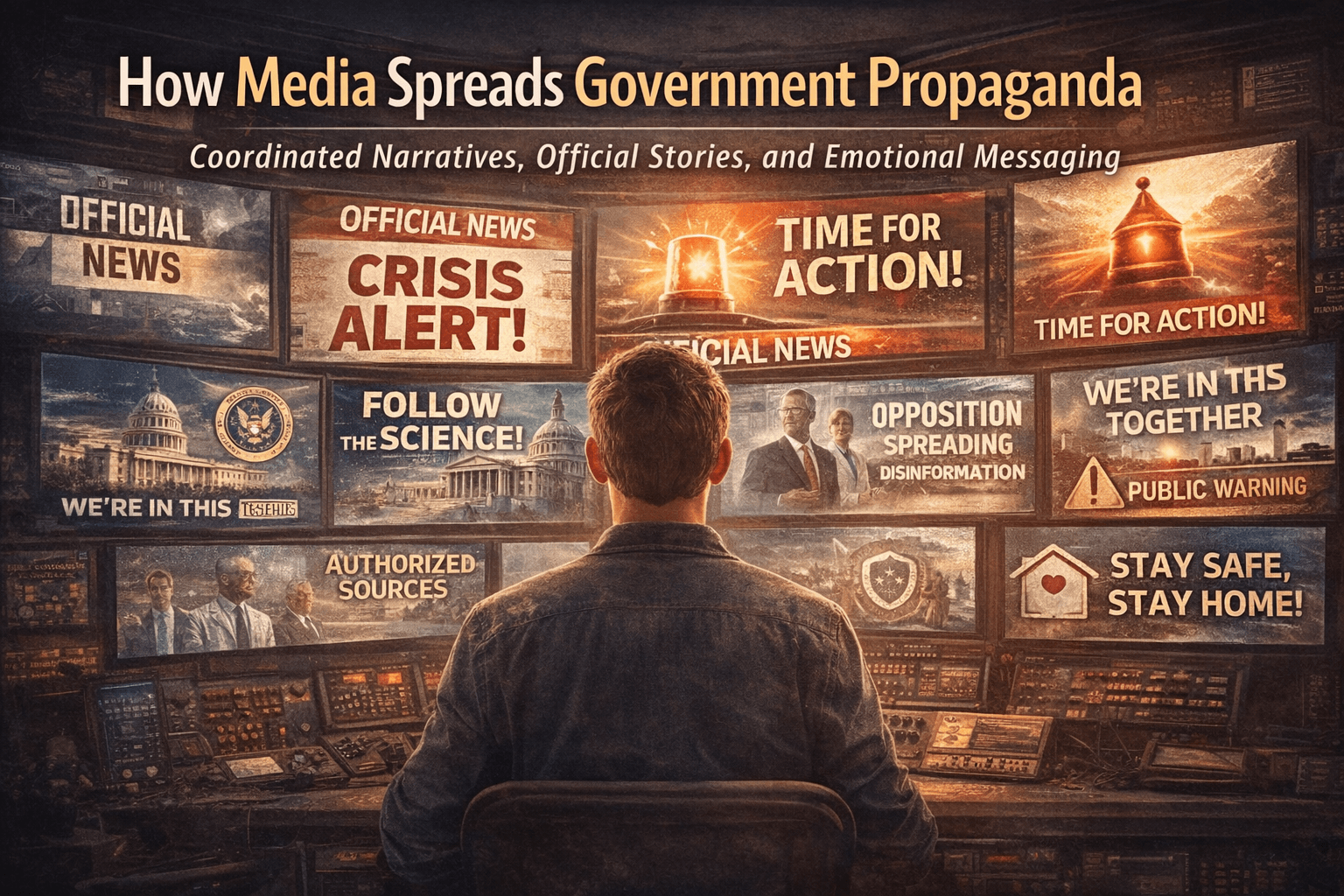
Most people think the media simply reports reality.
Something happens.
The media tells us about it.
We become informed.
That is the simple version.
But the media does far more than tell us what happened.
It shapes what we notice.
What we ignore.
What we fear.
What we repeat.
What we believe is normal.
What we think other people believe.
What we are allowed to question.
In that sense, the media does not only report the world.
It helps create the world inside our minds.
And once that inner world is formed, it begins to shape identity.
The media chooses what becomes visible
The first way the media shapes belief is by deciding what receives attention.
There are millions of things happening every day.
But only a tiny number become headlines.
That means the media is always selecting.
It selects:
- which stories matter
- which voices are heard
- which events are repeated
- which victims are named
- which scandals are amplified
- which issues disappear
- which questions are never asked
This selection process is powerful.
Because most people do not build beliefs from the totality of reality.
They build beliefs from what they are repeatedly shown.
If something is shown every day, it feels important.
If something is ignored, it can feel as if it does not exist.
This is how visibility becomes belief.
Repetition turns information into reality
One of the strongest tools of media influence is repetition.
When a phrase, image, fear, or narrative is repeated often enough, it begins to feel familiar.
Then it begins to feel obvious.
Then it begins to feel true.
This can happen even when people have not personally investigated the subject.
They may simply have heard the same framing so many times that it becomes the mental background.
This is why repeated media phrases matter.
Phrases like:
- experts say
- misinformation
- far-right
- safe and effective
- conspiracy theory
- climate emergency
- cost of living crisis
- threat to democracy
- public health emergency
- community tensions
Some of these phrases may describe real issues.
But they also do something else.
They frame how the public is meant to interpret events.
The phrase becomes a mental shortcut.
And mental shortcuts can become beliefs.
Framing matters as much as facts
The media does not only tell us what happened.
It tells us what it means.
That is framing.
A protest can be framed as:
- public anger
- extremism
- civil unrest
- democratic expression
- dangerous misinformation
- a threat to public order
The same event can create very different beliefs depending on the frame.
That is why media influence is often subtle.
It is not always about lying directly.
Sometimes it is about emphasis.
Tone.
Word choice.
Context.
Omission.
Timing.
Images.
Expert selection.
Emotional atmosphere.
By the time the viewer receives the story, they may already be guided toward the “correct” interpretation.
Fear makes media messages stick
Fear is one of the most powerful belief-forming forces.
When people are afraid, they look for certainty.
They look for authority.
They look for protection.
They become more likely to accept simple narratives, urgent instructions, and official explanations.
This is why fear-based media can be so influential.
Fear narrows the mind.
It reduces curiosity.
It makes people want safety more than complexity.
And when fear is repeated daily, people can begin to live inside a constructed emotional reality.
They may not only believe a story.
They may feel it in their body.
That is when belief becomes much harder to question.
The media can create social pressure
Another powerful media effect is the creation of apparent consensus.
When people are told repeatedly that “everyone knows,” “experts agree,” “decent people believe,” or “only dangerous people question,” they begin to feel social pressure.
They may think:
“If I question this, what does that say about me?”
This matters because most people do not want to be rejected.
They do not want to be labelled.
They do not want to be seen as foolish, extreme, selfish, or immoral.
So they begin to self-censor.
They may stay silent even when something feels wrong.
And over time, silence can start to feel like agreement.
This is how media shapes not only what people believe, but what they feel safe enough to say.
The media teaches us who to trust
Media also shapes belief by telling us which voices are legitimate.
Some people are introduced as experts.
Others are introduced as activists.
Some are called whistleblowers.
Others are called conspiracy theorists.
Some are given long interviews.
Others are reduced to a warning label.
Some are treated as credible before they speak.
Others are discredited before the audience hears them.
This matters.
Because people often decide whether to trust a message before they have truly examined its content.
They are influenced by the status assigned to the messenger.
That is why media labels are powerful.
They guide perception before thinking has fully begun.
The media can turn questioning into identity danger
One of the strongest ways belief is protected is by making questioning feel socially dangerous.
If questioning a narrative means being labelled:
- ignorant
- hateful
- selfish
- extreme
- dangerous
- anti-science
- disloyal
- a conspiracy theorist
then many people will avoid questioning.
Not because they are convinced.
But because the cost of inquiry feels too high.
This is where belief becomes tied to identity.
A person begins to think:
“I am a good person because I believe what good people are supposed to believe.”
Or:
“If I question this, maybe I become one of the bad people.”
This is deeply powerful.
Because once belief is fused with moral identity, people often defend it with emotion rather than inquiry.
Omission is one of the quietest forms of influence
Not all media influence comes from what is said.
Much of it comes from what is not said.
The missing context.
The unasked question.
The ignored witness.
The unexplored conflict of interest.
The story that vanishes too quickly.
The expert who is never invited.
The pattern that is never connected.
Omission is difficult to notice because we do not know what we are not being shown.
That is why media literacy is not only about spotting falsehood.
It is also about asking:
- What is missing?
- Who is not speaking?
- What question is not being asked?
- What context would change how this feels?
- Who benefits from this framing?
- What would I think if this story were told from another angle?
These questions help restore discernment.
Media creates emotional weather
Many people think they are simply consuming news.
But often they are absorbing an emotional atmosphere.
Daily media can create:
- anxiety
- outrage
- helplessness
- moral panic
- distrust
- division
- urgency
- despair
- dependency on authority
This emotional weather matters.
Because people make very different decisions when they are calm than when they are afraid or angry.
If a population is kept in a constant state of alarm, it becomes easier to steer.
People begin reacting rather than reflecting.
They become less connected to inner authority.
They become more dependent on external interpretation.
That is why protecting your attention is not avoidance.
It is sovereignty.
The media shapes identity through belonging
Media does not only tell us what to think.
It tells us who we are if we think it.
It creates identity groups:
- informed people
- good citizens
- responsible people
- modern people
- tolerant people
- dangerous people
- backward people
- extremists
- deniers
- conspiracy theorists
These identity labels are powerful.
People begin aligning themselves with the group they want to belong to.
This means belief becomes social.
It becomes a way of proving who you are.
That is why people can become deeply attached to media narratives.
They are not only defending information.
They are defending identity.
Why people do not notice media influence
Most media influence works because it feels normal.
It does not usually feel like programming.
It feels like staying informed.
It feels like being responsible.
It feels like keeping up.
It feels like knowing what is going on.
But when the same narratives, fears, labels, and emotional frames are repeated day after day, they become part of the mind’s operating system.
A person may begin to believe:
- this is what matters
- this is what everyone thinks
- this is who should be trusted
- this is what must not be questioned
- this is what a good person believes
And because these beliefs feel socially reinforced, they become hard to examine.
This does not mean all media is false
It is important to be balanced.
The answer is not to say:
“The media always lies.”
That is too simple.
Sometimes media reports important truths.
Sometimes journalists do courageous work.
Sometimes exposure of wrongdoing comes through media.
Sometimes people genuinely need information about what is happening.
The deeper issue is not whether every story is false.
The deeper issue is whether people are conscious of how media shapes perception.
A mature person does not blindly accept everything.
But they also do not blindly reject everything.
They learn to discern.
How to reclaim your beliefs from media influence
A few simple practices can help:
1. Notice your emotional state
Ask:
How does this story make me feel?
Fear, anger, urgency, and shame are often signs that your nervous system is being engaged.
That does not mean the story is false.
But it does mean you should slow down before absorbing it as truth.
2. Separate facts from framing
Ask:
What actually happened, and what interpretation is being added?
This is one of the most important media literacy skills.
3. Look for repeated phrases
When the same phrase appears everywhere, notice it.
Ask:
Who chose this language, and what does it make me feel or assume?
4. Ask what is missing
Every story has boundaries.
Ask:
What context would make this more complete?
5. Notice labels
When a person or group is labelled before being heard, pause.
Ask:
Am I being invited to think, or instructed how to feel?
6. Return to inner authority
Ask:
What do I actually know? What have I personally verified? What feels unresolved?
It is okay not to know.
Not knowing is often more honest than rushing into a belief.
How Identity Awakening System (IAS) helps
The Identity Awakening System helps people become aware of the beliefs they have absorbed from outside themselves.
That includes beliefs shaped by:
- family
- education
- religion
- media
- government
- corporate systems
- social pressure
IAS helps you ask:
- What beliefs did I inherit from media narratives?
- What fears have been repeated into me?
- What labels have shaped my sense of reality?
- What do I believe because I investigated it?
- What do I believe because it was repeated?
- What still feels true when I step away from the noise?
This matters because identity is not only shaped by what happens to us.
It is shaped by what we repeatedly allow into our attention.
If media can shape fear, belonging, morality, and perception, then it can shape identity.
Awakening begins when we notice that.
A gentler truth
Most people are not foolish for believing media narratives.
They are human.
They trust familiar voices.
They respond to fear.
They want to belong.
They want to be good.
They want to know what is happening.
But a person can be sincere and still be influenced.
They can be intelligent and still be framed.
They can be kind and still be conditioned.
That is why this work matters.
Not to become cynical.
But to become conscious.
Closing
The media shapes beliefs by choosing what we see, repeating certain phrases, framing meaning, activating fear, assigning credibility, and creating social pressure around what can be questioned.
Over time, those beliefs can become part of identity.
They shape not only what we think, but who we believe ourselves to be.
That is why awakening requires a different relationship with media.
Not blind trust.
Not blind rejection.
But calm, honest discernment.
The question is not only:
What am I being told?
The deeper question is:
What kind of person am I being shaped into by believing it?
Government propaganda and the media
One of the most sensitive areas of media influence is government messaging.
Every government communicates with the public. Some of this is useful and necessary. Public information campaigns can help people understand health guidance, tax changes, voting rules, emergency alerts, safety issues, or national risks. The UK Government Communication Service openly describes government campaigns as a normal part of public communication and provides guidance on how departments should deliver them.
But there is a line between public information and propaganda.
Public information helps people understand an issue clearly enough to make informed decisions.
Propaganda tries to shape perception, emotion, and behaviour in a preferred direction, often by narrowing the range of acceptable questions.
This can happen when government messaging is repeated through:
- official press briefings
- approved experts
- public advertising
- broadcasters
- social media campaigns
- schools and institutions
- influencer partnerships
- “fact-checking” systems
- counter-disinformation units
Again, not all of this is automatically wrong. Governments do have a responsibility to respond to danger and communicate clearly. But when the government becomes too closely involved in deciding what counts as acceptable truth, public trust can begin to weaken.
The UK government has acknowledged work around misinformation and disinformation, including the Counter Disinformation Unit and Rapid Response Unit, which it described as responses to false information and malign actors online. Parliament has also recognised that disinformation can appeal to emotion and bias, influence public opinion, and spread quickly online.
The difficulty is this:
Who decides what is misinformation?
That question matters deeply.
Because if a government labels certain views as misinformation too quickly, especially during a crisis, then honest doubt, dissent, early warnings, and uncomfortable questions can be pushed outside acceptable conversation.
This does not only shape public opinion.
It shapes identity.
People begin to think:
- “Good citizens believe this.”
- “Responsible people do not question this.”
- “Only dangerous people disagree.”
- “If I ask questions, I may be judged or punished.”
- “It is safer to stay silent.”
At that point, the media is no longer simply informing the public.
It is helping create a moral identity around compliance.
This is one reason government propaganda can be so powerful. It often does not feel like propaganda at the time. It feels like safety, unity, responsibility, and being on the right side of society.
But healthy societies need more than unity.
They also need:
- transparency
- open debate
- genuine accountability
- freedom to question
- protection for dissent
- clear separation between journalism and state messaging
- humility from those in power
Without those things, public communication can become a tool for managing belief rather than serving truth.
The deeper question is not whether governments should communicate.
Of course they should.
The deeper question is:
When does communication become psychological steering?
And:
How do citizens remain awake enough to tell the difference?
This is where identity awakening matters.
A person with stronger inner authority is less likely to be swept along by fear, slogans, repetition, or official pressure. They can pause. They can ask better questions. They can notice when a message is trying to create panic, shame, obedience, or social conformity.
They do not need to reject everything.
But they also do not surrender their discernment.
That is the balance.
Not blind trust.
Not blind rebellion.
But conscious, grounded inquiry.