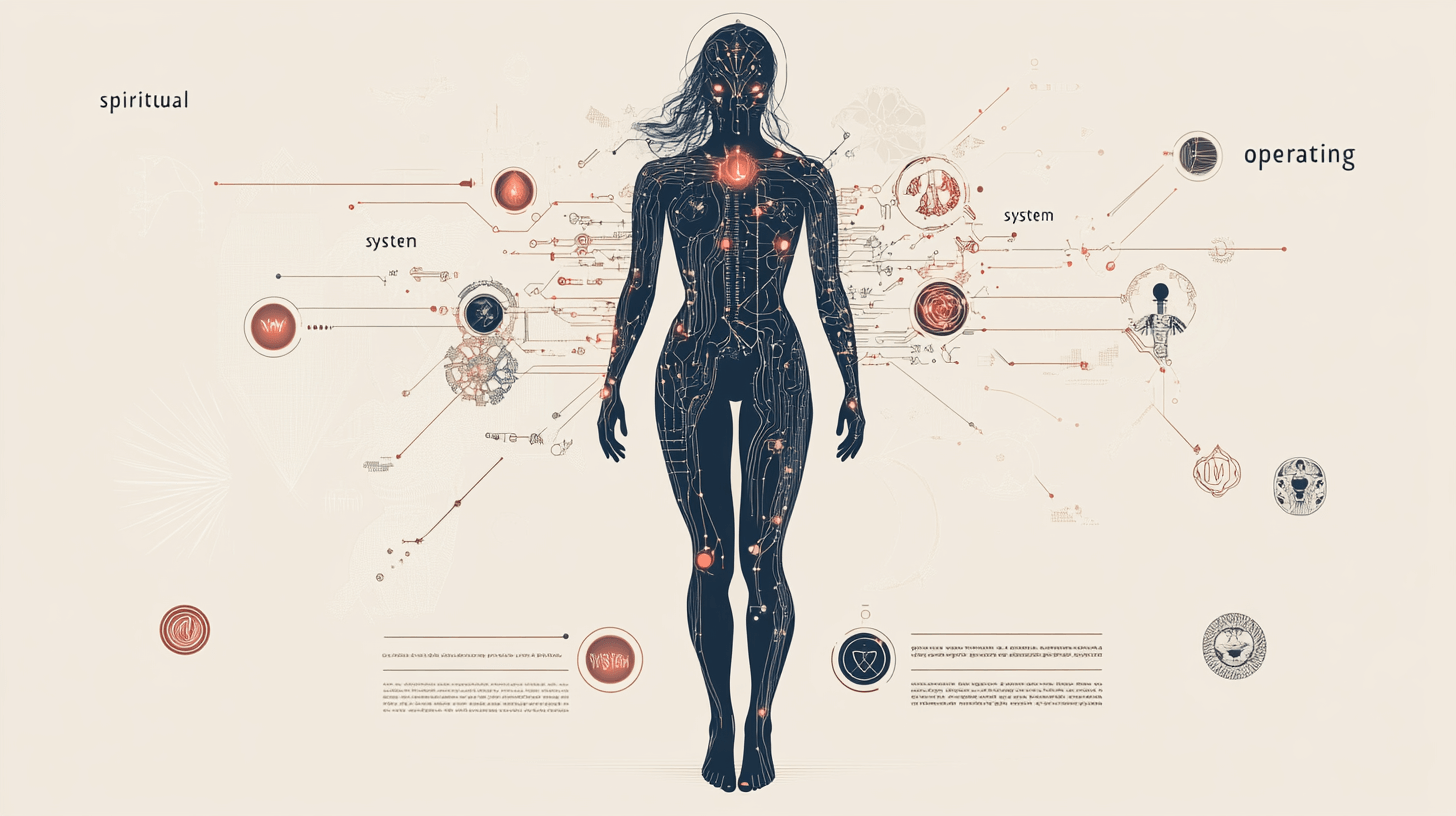
Florence Scovel Shinn’s The Game of Life and How to Play It reads like a spiritual operating manual for the human mind.
It’s not “think positive and hope.” It’s more like: your imagination, your words, your emotions, and your attention are inputs — and life reflects the output. Whether you call it spiritual law, psychology, nervous system regulation, or “the algorithm of consciousness,” the book’s core premise is simple:
Life isn’t a battle. It’s a game. But you can’t win a game if you don’t know the rules.
And for you as an IMMachines creator? This matters because you’re not just building funnels and GPTs — you’re building a frequency, a self-concept, and a pattern of expectation. Your systems don’t outperform your identity for long. (You can brute-force it for a while… then your subconscious pulls the handbrake at 3 a.m. and calls it “lack of motivation.”)
This post summarises the core teachings from the transcript you shared (based on the audio reading on YouTube), then translates them into practical creator moves you can actually use. Florence Scovel Shinn is very “Bible-coded” (by design), so I’ll keep it grounded, useful, and friendly to modern minds. Jesus Christ shows up a lot as the teacher of these laws in her framing—whether you read that spiritually, metaphorically, or psychologically, the mechanics she points to are the same: what you impress within, expresses without.
The Core Framework: Three Minds, One Output
Shinn describes three “departments” of mind:
-
Conscious mind: the reasoning mind; reacts to appearances (bills, stats, rejection emails, aches, doom headlines).
-
Subconscious mind: power without direction; it executes what you consistently impress through emotion, imagery, and speech.
-
Superconscious mind: the “God mind” / higher intelligence within; the realm of perfect ideas and the divine design for your life.
The key point: the subconscious takes orders. It doesn’t debate. It doesn’t do sarcasm. It doesn’t spot your “I’m only joking.” It prints and ships.
So if your inner movie is “it never works for me,” and your daily language is “I’m always behind,” the subconscious says: Copy that. Running program.
Then you call it “reality.”
Chapter 1: The Game — Your Words and Pictures Create Your Path
Shinn’s opening punch:
-
What you sow, you reap.
-
The imaging faculty (imagination) is creative.
-
Words are a primary lever.
She uses vivid examples: people imagining disease and manifesting it; people joking about poverty and landing there; people speaking themselves into limitation. It’s dramatic, but the underlying principle is real even in modern terms:
Your nervous system and attention shape your perception, decisions, and behavior. Behavior shapes outcomes. Outcomes reinforce beliefs. Beliefs become identity. Identity becomes your “normal.”
Shinn’s twist is: don’t just manage behavior—manage the inner picture.
IMMachines translation
If you keep picturing:
-
“My audience won’t care”
-
“I’m too late”
-
“I’m not technical enough”
-
“People don’t buy”
…you will unconsciously steer toward proof.
Your job becomes training the imagination to default to good: clarity, service, creative power, supply, connection.
Not delusion. Direction.
Chapter 2: The Law of Prosperity — Supply Exists, But You Must “Make the First Move”
Shinn frames prosperity as a spiritual law: there is a supply for every demand, and you release it with the spoken word plus faith.
She repeats a theme that shows up constantly:
-
Ask (make the demand clearly)
-
Believe (feel it as done)
-
Act as if (prepare for it)
-
Follow intuition (obey the lead)
She gives examples like “dig your ditches” (prepare before evidence appears), buying blankets before securing an apartment, ordering an expensive lunch to demonstrate faith, etc. You don’t have to copy the exact behaviors—but you do need the principle:
Active faith is proof to your subconscious that you expect the result.
IMMachines translation
You say you want a £2k/month digital product?
Then your “digging ditches” might look like:
-
Setting up checkout + delivery before you feel ready
-
Writing the email sequence before the list is big
-
Recording the demo video before the views show up
-
Building the simple offer stack before perfect branding
Not because pretending makes money magically appear — but because preparation collapses doubt and signals: this is happening.
Chapter 3: The Power of the Word — You’re Always Making Laws for Yourself
This chapter is basically: watch your mouth.
Shinn’s line is ruthless: by your words you are justified or condemned. She treats language as a law-making machine: “I always miss the bus” becomes a personal rule. “I always catch it” becomes another.
She warns about:
-
idle words
-
complaining loops
-
“old-fashioned chats” full of lack, sickness, failure
-
superstition and lucky objects replacing inner power
IMMachines translation: do a language audit
Here are creator phrases that quietly sabotage income:
-
“I’m not consistent.”
-
“My niche is saturated.”
-
“The algorithm hates me.”
-
“I’m not a salesperson.”
-
“People don’t have money.”
-
“It’s hard to get traction.”
Each one is a command to the subconscious.
Swap them for truthful, functional commands:
-
“I’m building consistency one rep at a time.”
-
“My angle makes me distinct.”
-
“My job is clarity and volume; platforms respond to output.”
-
“Selling is serving when the offer is real.”
-
“Right buyers exist; I’m learning how to reach them.”
-
“Traction is a system; I’m installing it.”
You’re not lying. You’re choosing the law you live under.
Chapter 4: The Law of Non-Resistance — Stop Feeding What You Fear
This chapter is one of the strongest.
Shinn says resistance is “hell” because it locks you into the thing you oppose. Non-resistance is not passivity. It’s emotional neutrality + spiritual poise: you stop fueling the drama, and the situation loses its grip.
She gives examples like:
-
a fear-based situation dissolving once someone stops reacting
-
“agree with thine adversary quickly” meaning: agree the situation can turn to good
-
“baptize the event success” (rename it internally)
The key pattern: what you fight, you keep. What you bless, you transform.
IMMachines translation
Creators resist in subtle ways:
-
resisting “not enough subscribers”
-
resisting “I’m behind”
-
resisting “I hate launching”
-
resisting “tech overwhelm”
Resistance burns energy and narrows thinking. Non-resistance creates bandwidth.
Try this:
When anxiety hits, don’t argue with it. Don’t “fix yourself.” Say:
“This is just pressure. Pressure is not prophecy.”
Then return to one clean action.
Non-resistance isn’t “do nothing.” It’s “do the next right thing without panic.”
Chapter 5: Karma and Forgiveness — Your Boomerangs Return Faster When You Know Better
Shinn describes life as boomerangs: what you send out returns—sometimes quickly, especially when you’re “high in consciousness.” She also introduces “grace”: forgiveness as a higher law that can neutralize mistakes.
Whether you interpret this metaphysically or psychologically, it works like this:
-
If you hold resentment, your mind searches for threats and betrayal.
-
If you hold criticism, you become tense and rigid (and yes, it shows up in health and relationships).
-
If you hold guilt, you sabotage receiving.
Forgiveness, in her framing, releases the pattern.
IMMachines translation
If you want more flow in business, check these three blocks:
-
resentment (toward platforms, buyers, past clients)
-
shame (about your inconsistency, money, age, skill gaps)
-
fear (of being seen, judged, failing publicly)
You don’t “fight” these into submission. You bless and release.
You can keep it simple:
“I release the old contract. I’m free to create and receive now.”
Chapter 6: Casting the Burden — Stop Carrying What Your Higher Mind Can Carry
Shinn’s method for impressing the subconscious is surprisingly practical: cast the burden onto the superconscious / Christ within. The repeated line is basically:
“I cast this burden… and I go free.”
She describes how repetition clears the mind until the “lead” appears—an intuitive next step.
This is also where she addresses “darkest before dawn”: old subconscious fears rise up as they’re being cleared. The solution isn’t “try harder.” It’s: keep affirming, keep faith, keep moving in small obedient steps.
IMMachines translation
This is the creator version:
When you feel overwhelmed, don’t expand your plan. Shrink it.
-
One action.
-
One page.
-
One video.
-
One email.
-
One improvement.
And let the bigger strategy come after calm returns. This strategy is taught in the Identity Awakening System – it asks you to simply remember the next small step.
Spiritual angle (without fluff):
Your higher self can see paths your anxious mind cannot. Casting the burden is simply releasing control long enough for wisdom to surface.
Chapter 7: Love — The Fastest “Protection” in the Game
Shinn goes hard here: love fulfills the law. Real love is selfless, not manipulative, not fear-driven.
She claims that love and goodwill create an “aura of protection” and dissolve enemies. In modern terms: when you operate from goodwill, you stop creating needless conflict, you become more persuasive, and you see solutions faster. You also become harder to destabilize.
IMMachines translation
If your business is built on tension, proving, posturing, and subtle contempt for your audience… it will always feel heavy.
If your business is built on:
-
clarity
-
compassion
-
respect
-
service
…it becomes lighter, and the “game” starts cooperating.
A clean question to ask before creating content:
“Am I trying to get something from people… or give something to people?”
The audience can feel the difference. So can your nervous system.
Chapter 8: Intuition — Speak the Word, Then Wait for the Lead
This is the “how-to” chapter.
Shinn says: make the demand, then don’t thrash around. Ask for guidance. The lead might come as:
-
a hunch
-
a remark from someone
-
a passage in a book
-
an unexpected urge to go somewhere
And the rule: don’t violate a hunch.
IMMachines translation: build an intuition capture system
Most creators ignore intuition because it doesn’t arrive as a spreadsheet.
Here’s a simple system:
-
Keep a “Leads List” note on your phone.
-
When you get a clear nudge, write it down.
-
If it repeats 2–3 times, act on it.
-
If it feels fear-based and frantic, pause. If it feels calm and clear, move.
Intuition doesn’t shout. Anxiety shouts. Learn the difference.
Chapter 9: Perfect Self-Expression — The Divine Design Is Your Real Business Model
This chapter is basically: you’re here for a specific expression. There’s a unique role only you can fill. When you align with it, the supply follows.
She describes the “square of life”:
-
health
-
wealth
-
love
-
perfect self-expression
When you’re off-design, life gets noisy. When you’re on-design, effort feels more like play.
IMMachines translation
This is the solopreneur truth:
Your most profitable work is usually the work that feels most like you.
Not easiest. Not always comfortable. But true.
Ask:
-
What do I teach naturally?
-
What do people thank me for repeatedly?
-
What do I keep returning to even when I “quit”?
-
What pain have I alchemized into wisdom?
That’s your design trying to surface.
And yes — systems matter. But systems amplify alignment. They don’t replace it.
Chapter 10: Denials and Affirmations — Replace the Program, Don’t Wrestle the Symptoms
Shinn distinguishes:
-
Denial: refusing to accept the “appearance” as final truth
-
Affirmation: installing the new idea in the subconscious
She also warns about sloppy asking. You don’t demand money “any way.” You ask for it to come under grace in perfect ways (so you don’t get the money via disaster).
You don’t ask for “a relationship.” You ask for the divine selection.
IMMachines translation: how to use affirmations without going weird
Use them like identity commands, not magical incantations.
Good affirmations are:
-
believable enough to land
-
emotionally clean (no strain)
-
repeated enough to become default
Try these (creator edition):
-
“I’m guided to the right action at the right time.”
-
“My work reaches the people it’s meant to help.”
-
“I create value daily; income is the echo.”
-
“I am safe to be seen.”
-
“I serve powerfully and receive cleanly.”
Then pair it with the real-world step: post, publish, improve, follow up.
The IMMachines “Game Plan” (A Practical 7-Day Installation)
If you want to actually play this instead of just reading it, do this for a week:
Day 1 — Language cleanse
Write down your top 10 “creator complaints.” Rewrite each as a new law.
Day 2 — The inner movie
Spend 3 minutes imagining a single scene: you delivering value confidently, someone thanking you, the offer working. Keep it simple. Same scene daily.
Day 3 — Dig one ditch
Pick one “prep action” you’ve avoided (checkout, email sequence, demo video). Do it.
Day 4 — Non-resistance rep
Choose one stressor and practice neutrality: “This can turn to good.” Then do one calm action.
Day 5 — Love audit
Bless your audience for 60 seconds. Seriously. Then create something helpful without trying to “get” anything.
Day 6 — Ask for the lead
Ask clearly: “Show me the next right step.” Then watch for the nudge. Act on it.
Day 7 — Receive practice
Accept a compliment, a sale, a gift, support, a win—without deflecting. Receiving is a muscle.
A grounded note (because we’re adults)
Some claims in Shinn’s worldview are metaphysical and sweeping (health, wealth, instant manifestations, etc.). You don’t need to swallow everything whole to benefit.
The usable essence is this:
-
Your inner world shapes your outer decisions.
-
Your words shape your expectations.
-
Your expectations shape your behavior.
-
Your behavior shapes results.
-
Your results reinforce identity.
Which means: change the inner inputs, and your life outputs change.
Closing: The Real “Game” Is Identity
If you’re building IMMachines as a mission — not just a money machine — Shinn’s work lands as a reminder:
The outer game (offers, content, funnels) is downstream of the inner game (faith, poise, imagination, love, guidance).
So today, play one clean move:
-
Speak the better word.
-
Hold the better picture.
-
Take the next right step.
-
Release the panic.
-
Let the path meet you.
And if your mind complains, tell it:
“Thanks for the feedback. We’re playing a different game now.”