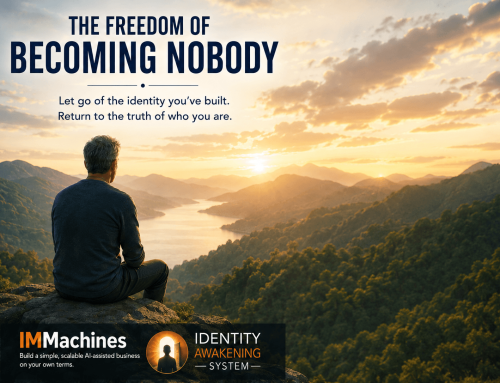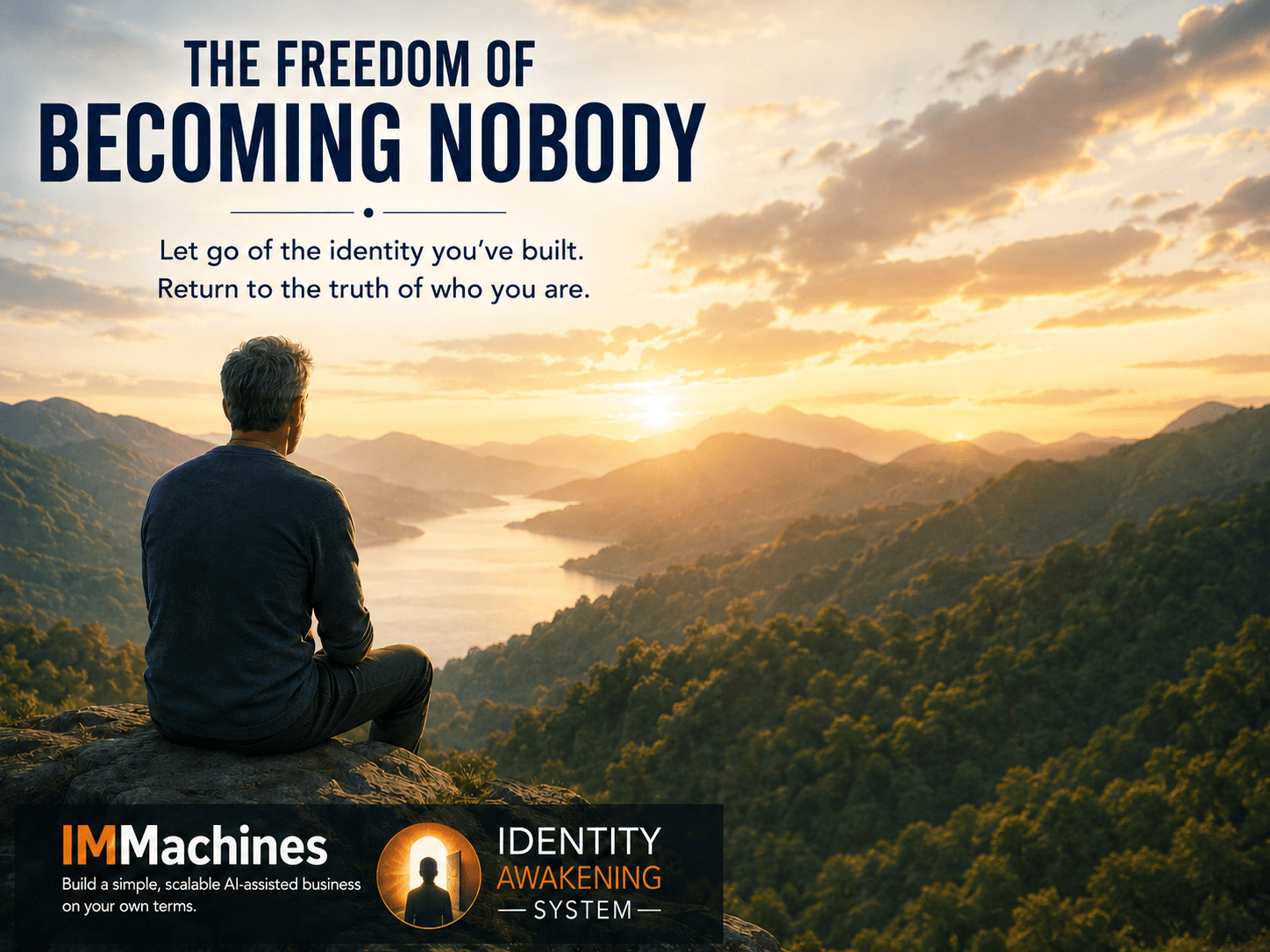
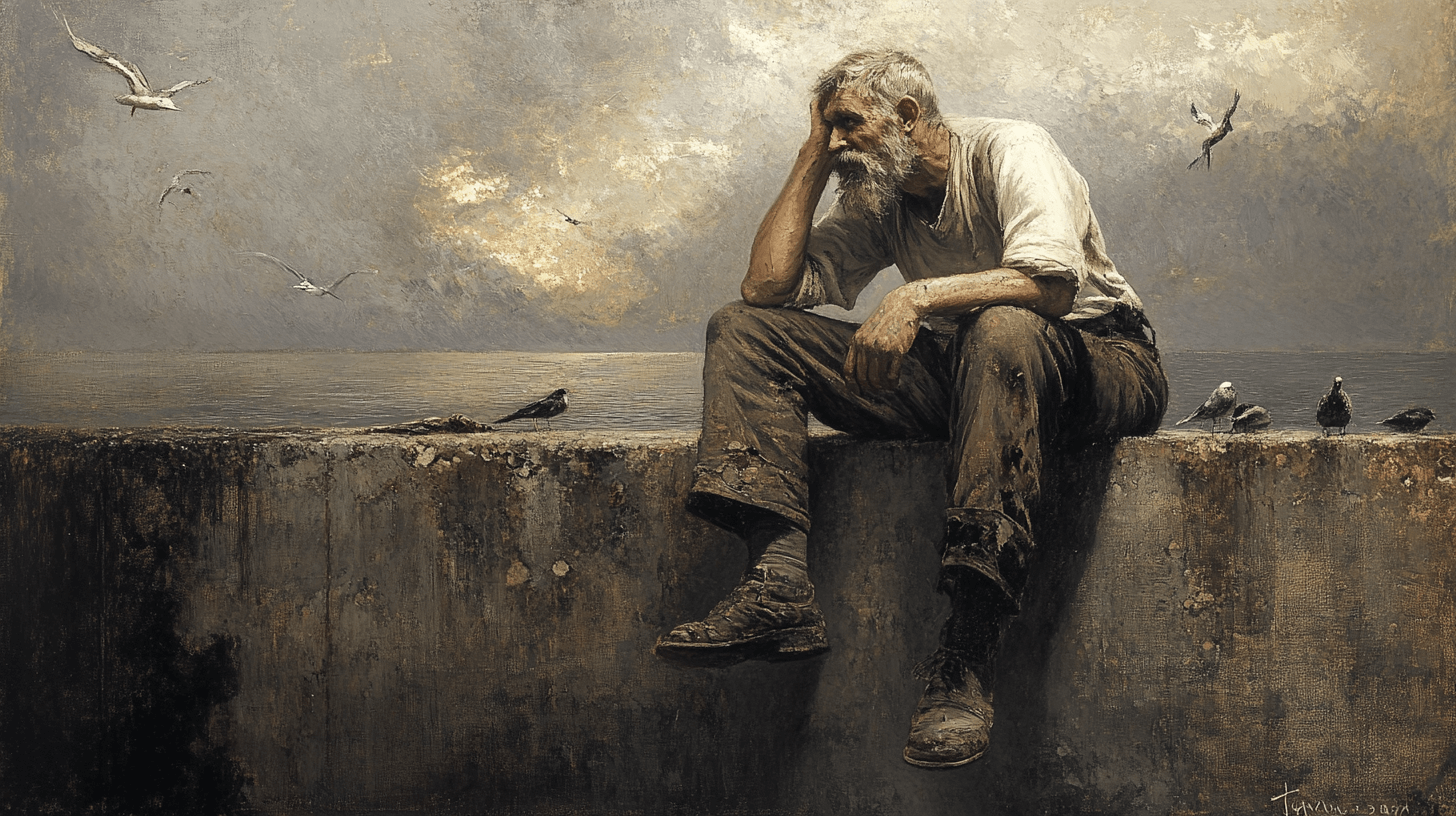
William (77) just said the quiet part out loud:
You can “win” life on paper and still feel empty.
Promotion? Got it. House? Paid off. Respect? Mostly.
And yet… there’s another mountain. Another goal. Another thing.
That’s not because you’re broken.
It’s because the game most of us were trained to play is rigged around a moving finish line.
This post is for anyone who’s built, hustled, achieved, provided… and still felt the ache underneath it all.
And it’s also a perfect doorway into IAS (Identity Awakening System)—because this is exactly what IAS is designed to solve:
Not “how do I get more?”
But “how do I stop outsourcing my sense of enoughness to the outside world?”
The real trap: chasing a feeling disguised as a goal
William’s biggest realisation is brutal and liberating:
He wasn’t chasing money, titles, or validation.
He was chasing a feeling:
-
safety
-
worthiness
-
love
-
“I matter”
-
“I’m enough”
And he thought the world would hand him that feeling once he achieved enough.
That’s the core illusion:
External achievement can’t permanently repair an internal identity wound.
It can temporarily distract it. It can decorate it. It can even numb it.
Because identity doesn’t respond to proof.
Identity responds to permission—and the permission has to come from inside.
Why the finish line keeps moving
William describes it perfectly:
You get the thing… and then there’s another thing.
That’s not bad luck. That’s psychology.
Here’s what’s happening:
1) The mind adapts
Your nervous system normalises yesterday’s dream as today’s baseline.
2) Fear doesn’t disappear—it reattaches
You pay off the house… then fear grabs retirement.
You retire… then fear grabs health.
You get respect… then fear grabs comparison.
William’s line nails it:
“The fear doesn’t leave when your life gets better. The fear leaves when you change.”
That’s IAS in one sentence.
The hidden cost: postponed living
The tragedy in this story isn’t that William worked hard.
It’s that he postponed his life waiting for the “real life” to begin.
He missed dinners. Games. presence. connection.
Not because he didn’t love his family.
But because he believed the lie:
“I’ll relax when I’ve earned it.”
And that is how good people grind themselves into dust.
IAS calls this pattern Deferred Selfhood:
-
“I’ll be myself when I’m secure.”
-
“I’ll enjoy life when I’m successful.”
-
“I’ll be peaceful when things settle down.”
But life doesn’t “settle down.”
Life is a river. You don’t wait until the river stops to start drinking.
The shift: from “being somebody” to “being here”
William contrasts two kinds of older people:
The miserable ones:
-
still comparing
-
still keeping score
-
still angry someone has a nicer car (at 84… mate, come on)
The peaceful ones:
-
present
-
curious
-
grateful
-
not trying to prove anything
His friend Earl (86) says:
“I spent 60 years trying to be somebody. Now I’m just trying to be here.”
That’s not giving up.
That’s graduating.
It’s the move from performance identity to presence identity.
And IAS is built specifically to help creators (especially mid-life creators) make that transition without needing a crisis to force it.
How this relates to IAS (Identity Awakening System)
IAS is not a motivational poster.
IAS is a recalibration system for the inner driver of your life: identity.
If William had IAS at 25, the system would have helped him see the real thing he was chasing much earlier:
-
not success
-
not money
-
not applause
…but enoughness.
IAS works by helping you spot the invisible scripts running your decisions.
In William’s story, the core script is:
“If I become impressive enough, I’ll finally be safe and worthy.”
IAS would label that script as a borrowed identity strategy:
-
“I must earn love.”
-
“I must prove value.”
-
“I must achieve enough to relax.”
Then IAS does something radical:
It doesn’t shame the script.
It thanks it.
Because that strategy was trying to protect you.
It just got promoted to CEO of your life… and it’s not qualified.
The IAS Map: where William got stuck
Here’s a simple IAS translation of his journey:
1) Origin wound (childhood imprint)
William watched his father get treated like “nothing.”
So his nervous system made a vow:
“That won’t be me.”
This isn’t weakness. It’s wiring.
2) Identity construction (the “somebody” mask)
He built “Vice President William” to outrun humiliation.
3) Achievement loop (endless mountain range)
Each win moved the finish line because the goal was never the title.
The goal was inner safety.
4) Presence deficit (relationships suffer)
He “provided” but wasn’t present—because his mind was still working even when his body was home.
5) Awakening moment (truth breaks through)
At 77 he finally sees: the chase was for a feeling he could give himself.
That’s the IAS turning point:
the moment you realise the problem was never outside you.
6) Integration (practice, not perfection)
He says he’s still practicing at 77.
Good. That’s reality.
IAS isn’t a one-time epiphany. It’s a new operating system.
The creator version: “I’ll be happy when my business works”
If you’re a solopreneur, the “I’ll be happy when…” trap is sneakier.
It wears modern clothing:
-
“I’ll be happy when I hit 10k followers.”
-
“I’ll be happy when I finally have consistent sales.”
-
“I’ll be happy when my funnels are perfect.”
-
“I’ll be happy when I stop feeling behind.”
But underneath, it’s still the same need:
I want to feel safe. I want to feel enough.
IAS doesn’t tell you to stop building.
It helps you stop trying to use building as a substitute for being.
Because when you build from lack, you never arrive.
When you build from enough, you create with power—and you can actually enjoy it.
The IAS practice: 4 steps to exit the “I’ll be happy when…” loop
Here’s a simple process you can use today.
Step 1: Name your “I’ll be happy when…”
Write one sentence:
“I’ll be happy when __________.”
Don’t be clever. Be honest.
Examples:
-
“…I finally feel financially safe.”
-
“…my partner sees me.”
-
“…I stop feeling like I’m behind.”
-
“…people respect what I do.”
Step 2: Translate it into the feeling you actually want
Ask:
“What feeling do I believe that outcome will give me?”
Most answers are:
-
safe
-
loved
-
free
-
respected
-
enough
-
calm
-
in control
Now we’re at the real target.
Step 3: Spot the identity rule underneath it
Ask:
“What am I assuming must be true before I can allow myself to feel that?”
This reveals the inner law you’ve been living under, like:
-
“I must earn peace.”
-
“I must achieve to be worthy.”
-
“I must be needed to matter.”
-
“I must be ahead to be okay.”
IAS calls these identity contracts.
They’re not facts. They’re agreements you forgot you signed.
Step 4: Replace earning with allowing (the inner permission move)
Now the shift:
Instead of “How do I get it?” ask:
“What would it look like to practice that feeling today, in a small, honest way?”
Not fake positivity. Not delusion.
A practice.
Examples:
-
Safety → “I make one clean money decision today without panic.”
-
Worthiness → “I create today without needing applause.”
-
Love → “I give presence to one person for 10 minutes.”
-
Freedom → “I stop one unnecessary obligation this week.”
This is how you exit the loop:
You stop waiting for life to give you permission to be okay.
You choose okay-ness now—and build from there.
Spiritual truth hiding in plain sight: you were never meant to earn your right to exist
William’s message lands hard because it’s not just practical.
It’s spiritual.
The deepest slavery isn’t debt or schedules.
It’s the belief:
“I must become more before I’m allowed to be at peace.”
IAS is built around a different truth:
You are not here to prove you deserve life.
You are here to live it—awake, present, and aligned.
When that clicks, business changes too:
You still build.
You still serve.
You still grow.
But you stop trying to use growth to fix your identity.
And that is when the work becomes clean.
A gentle challenge (that hits like a hammer)
If you removed your next goal…
would you still know how to be okay today?
If the answer is “not really,” you’re not failing.
You’re just being invited into the real work:
the inside job.
And that’s what Identity Awakening System is for.
Not to give you “better beliefs.”
But to give you the capacity to live without being owned by them.