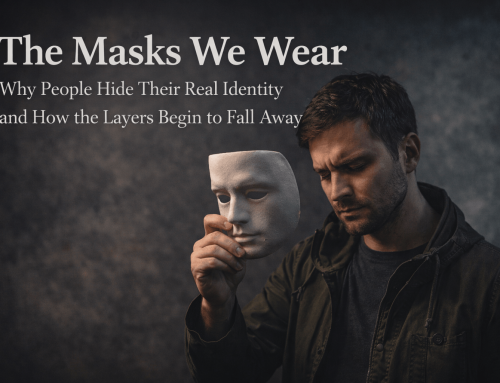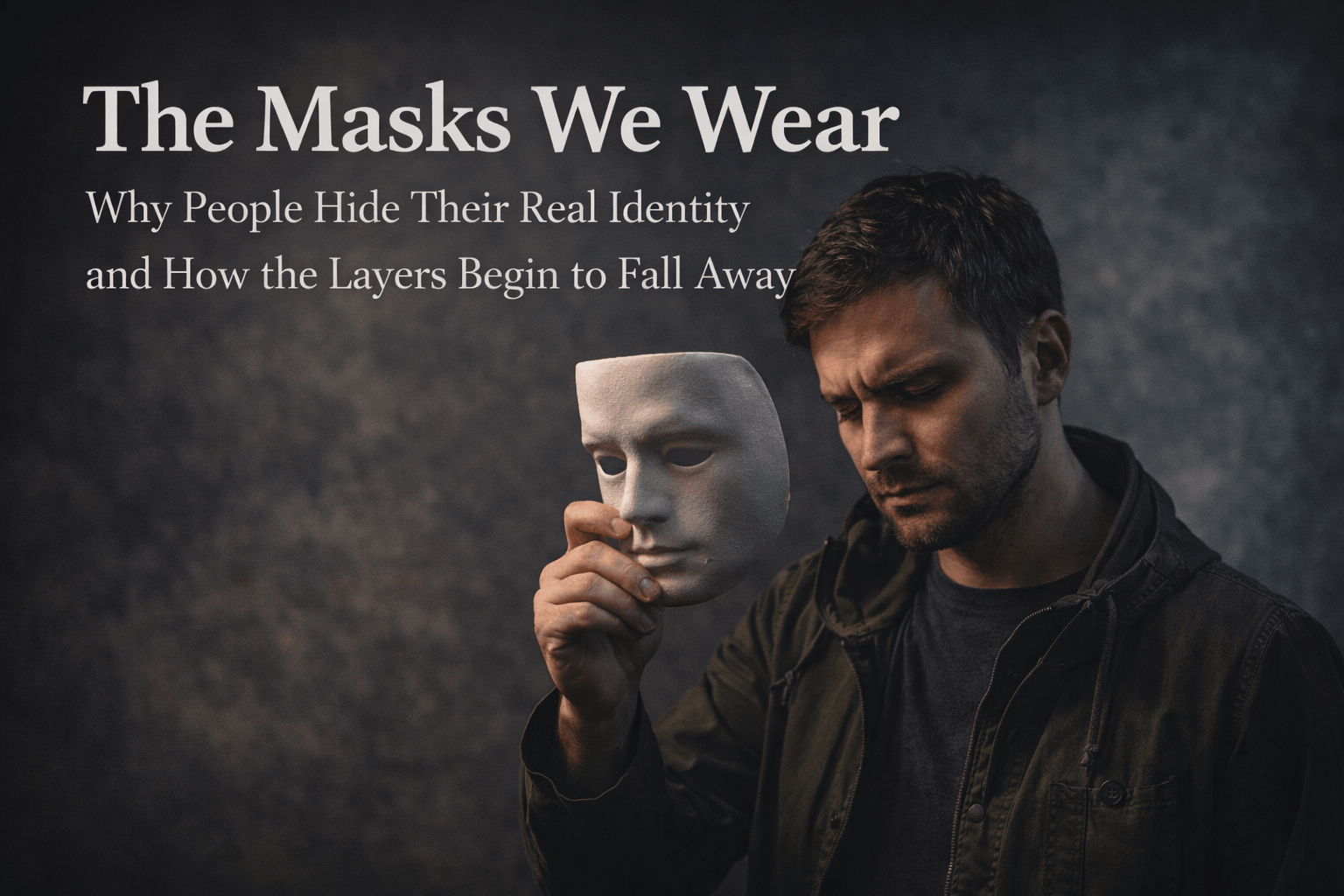
Most people wear masks in everyday life.
Not because they are trying to deceive others in a simple way.
But because the mask once helped them feel safer, more accepted, less exposed, or more in control.
Over time, the mask can become so familiar that it no longer feels like a mask at all.
It starts to feel like personality.
Like identity.
Like “just who I am.”
But often, the mask is a protective layer.
A version of self shaped around survival, shame, approval, fear, or the need to belong.
The more we understand the masks people wear, the more compassion we can bring to ourselves and others.
Because beneath the mask, there is usually something human:
fear of rejection
fear of not being enough
fear of being hurt
fear of being unseen
fear of being exposed
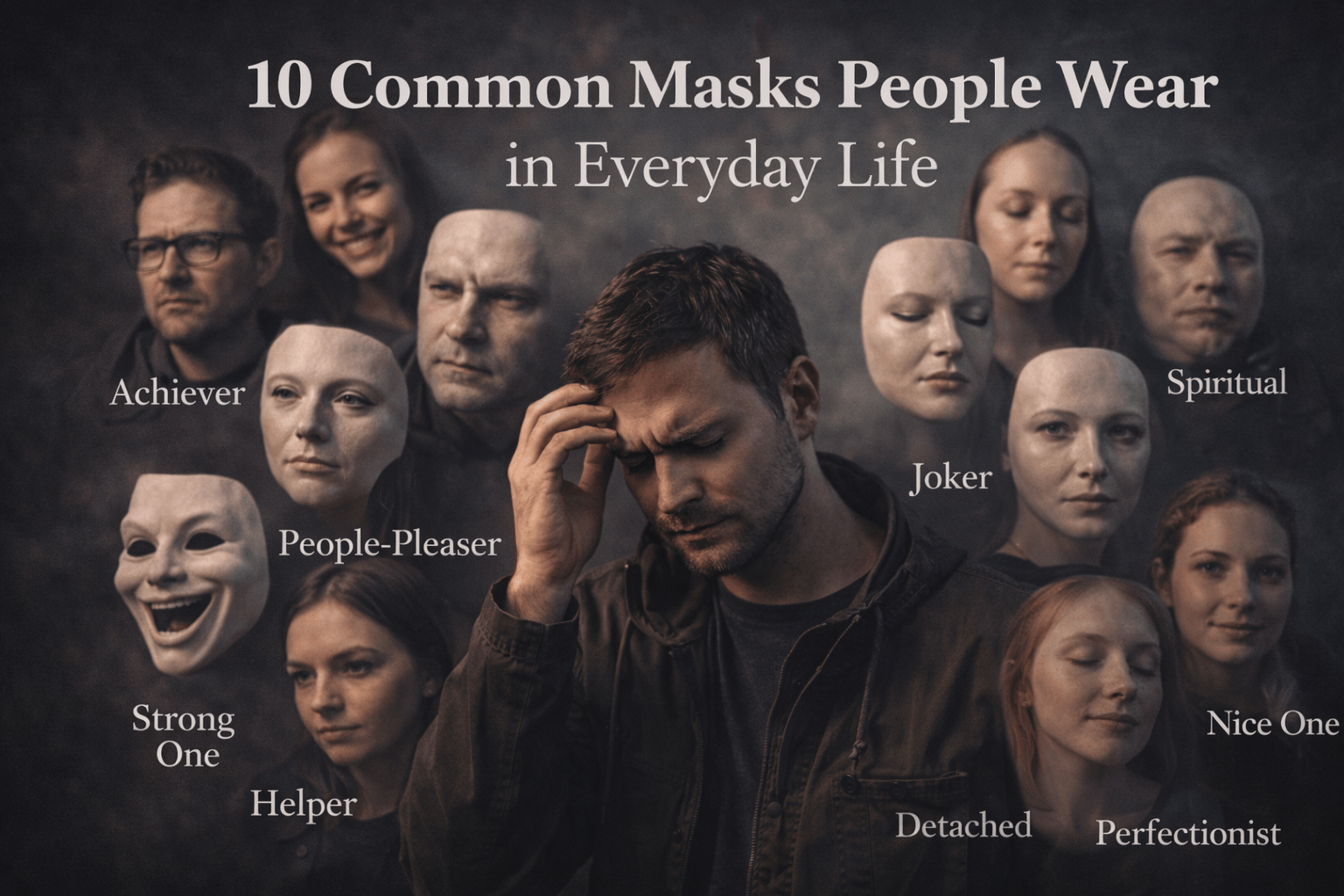
Here are 10 common masks people wear in everyday life.
1. The Achiever
This mask says:
If I succeed, I am worthy.
The achiever often looks focused, impressive, disciplined, and productive.
They may always be striving.
Always improving.
Always doing more.
From the outside, this can look admirable.
But underneath there is often a fear that without success, they will not feel valuable enough.
The mask protects against:
- inadequacy
- shame
- worthlessness
- emotional stillness
- being ordinary
This person may find it hard to rest because stopping can bring them face to face with what the mask has been trying to outrun.
2. The People-Pleaser
This mask says:
If everyone is happy with me, I am safe.
The people-pleaser often looks kind, agreeable, thoughtful, and easy to be around.
They may avoid conflict.
Say yes when they mean no.
Put other people first.
Try to keep the peace at all costs.
But underneath there is often fear of:
- rejection
- abandonment
- disapproval
- upsetting others
- being seen as selfish
This mask can make a person seem loving while quietly disconnecting them from their own truth.
3. The Strong One
This mask says:
If I never fall apart, no one can hurt me.
The strong one is dependable.
Capable.
Resilient.
The one everyone leans on.
They may be the person who always copes, always handles things, always keeps moving.
But underneath there is often deep fatigue, grief, and a fear that vulnerability will lead to pain, chaos, or loss of control.
This mask protects against:
- helplessness
- emotional exposure
- dependence
- being let down
- being seen as weak
The strong one often carries more than they let anyone know.
4. The Helper
This mask says:
If I am useful, I will be loved.
The helper is generous, attentive, and often deeply caring.
They may always be available.
Always giving.
Always solving.
Always supporting everyone else.
But underneath, there may be difficulty receiving, admitting need, or believing they matter when they are not being useful.
This mask protects against:
- feeling unneeded
- feeling unimportant
- receiving rejection
- facing personal emptiness
- allowing their own needs to matter
This person may look selfless while quietly disappearing from their own life.
5. The Joker
This mask says:
If I stay funny, no one will see how vulnerable I feel.
The joker is light, amusing, entertaining, and often loved for their energy.
They can make a room feel easier.
Less tense.
More alive.
But humour can also become a way of staying emotionally hidden.
Underneath the joking, there may be fear of:
- being seen too deeply
- being taken seriously
- exposing pain
- letting others close enough to hurt them
Sometimes laughter becomes armour.
Not because humour is false, but because it can also be protective.
6. The Detached One
This mask says:
If I do not care too much, I cannot be wounded.
This person may seem independent, cool, composed, or emotionally self-contained.
They may not reveal much.
They may stay distant.
They may appear unaffected.
But underneath there is often a fear of intimacy, disappointment, engulfment, or heartbreak.
This mask protects against:
- emotional dependence
- rejection
- grief
- disappointment
- needing too much
The detached person may seem free, but often they are protecting a very tender place.
7. The Controller
This mask says:
If I stay in control, life cannot overwhelm me.
The controller often appears organised, prepared, decisive, and highly responsible.
They may need certainty.
Structure.
Order.
Plans.
Predictability.
But underneath there is often anxiety.
A deep fear that if they relax, everything will fall apart.
This mask protects against:
- chaos
- helplessness
- instability
- uncertainty
- financial or emotional insecurity
The controller often carries the burden of believing that safety depends entirely on them.
8. The Spiritual One
This mask says:
If I stay elevated, I do not have to feel the messiness of being human.
This person may sound conscious, wise, calm, and evolved.
They may speak beautifully about healing, peace, energy, and awareness.
And some of that may be completely genuine.
But sometimes spirituality becomes a mask too.
It can be used to avoid:
- grief
- anger
- fear
- need
- shadow
- ordinary human vulnerability
This is not a criticism of spirituality.
It is simply a reminder that even beautiful language can sometimes be used to stay one layer away from pain.
9. The Perfectionist
This mask says:
If I get everything right, I cannot be criticised.
The perfectionist often seems meticulous, conscientious, and high-performing.
They may hold themselves to impossible standards.
Worry about mistakes.
Struggle to finish things.
Feel embarrassed by imperfection.
But underneath there is often fear of:
- criticism
- humiliation
- exposure
- failure
- not being enough as they are
This mask can create a life that looks polished on the outside while feeling pressurised and unforgiving on the inside.
10. The Nice One
This mask says:
If I stay pleasant, I can avoid conflict and stay accepted.
The nice one is warm, polite, easy, and often highly socially adapted.
They may rarely express anger.
Rarely challenge others.
Rarely make people uncomfortable.
But underneath there may be:
- suppressed resentment
- fear of disapproval
- fear of conflict
- fear of losing connection
- fear of being seen as difficult
This mask can look harmless, but it can quietly separate a person from their real feelings, boundaries, and truth.
Why these masks matter
Masks matter because they shape how people live, love, work, relate, and make decisions.
A mask is not just a performance.
It becomes a way of organising life.
It shapes:
- relationships
- self-worth
- communication
- career choices
- emotional habits
- what feels safe
- what feels possible
That is why masks can be so difficult to see and so difficult to release.
They are not just superficial behaviours.
They are protective identities.
The mask is not the enemy
This is important.
If you recognise yourself in one or more of these masks, the goal is not to shame yourself.
The mask is not a failure.
The mask is an adaptation.
At some point in your life, it probably made sense.
It probably helped you survive, belong, or function.
That deserves compassion.
But what once protected you may now be limiting you.
And that is where awakening begins.
How the layers begin to fall away
The layers do not usually fall away all at once.
They begin to soften when you ask honest questions like:
- What image am I trying hard to maintain?
- What does this version of me protect?
- What am I afraid would happen without it?
- What truth sits underneath this role?
- Where do I feel most performative?
- Where do I feel most real?
The aim is not to force authenticity as a new performance.
It is to become more honest.
More aware.
More gentle with what you find.
How Identity Awakening System (IAS) helps
The Identity Awakening System helps people recognise the masks, roles, and protective identities they have been living from.
It helps them ask:
- What have I mistaken for myself?
- What has this mask been protecting?
- What no longer feels true?
- What feels more real underneath the role?
- Who am I when I stop performing safety, worth, or belonging?
IAS does not shame the mask.
It helps you understand it, thank it, and slowly loosen its hold.
That is where deeper identity begins to emerge.
Closing
Most people are not simply “being themselves” all the time.
They are living through layers.
Adaptations.
Protective roles.
Masks.
That does not make them false.
It makes them human.
But there comes a point when the mask becomes too costly.
When the performance is exhausting.
When the role no longer fits.
When the deeper self wants air.
That is when identity awakening begins.
Not in becoming perfect.
But in becoming more honest.
And letting what is real come closer to the surface.