For decades, women have navigated layered expectations.
Be independent.
Be successful.
Be nurturing.
Be desirable.
Be strong.
Be self-sufficient.
Modern female identity has required constant balancing.
Now, the ground is shifting again.
AI may reduce employment.
Automation may compress labour markets.
Artificial womb technology may separate reproduction from the female body.
Fertility rates are already declining across much of the world.
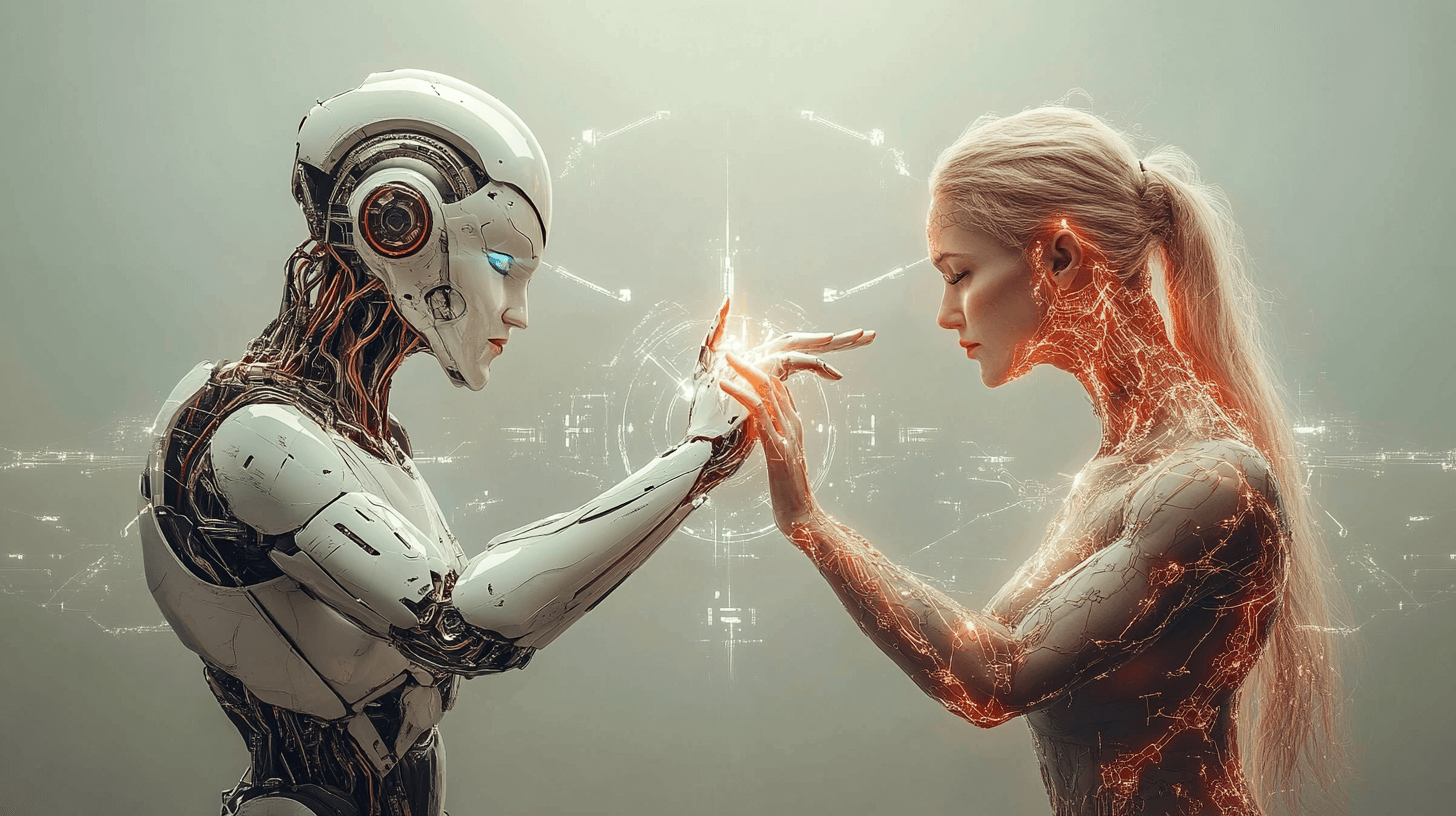
Synthetic companionship and sex robotics are emerging.
These developments do not just change economics.
They change identity.
The First Shift: When Work Is No Longer Central
Many women fought hard for access to education, professional autonomy, and economic independence.
Work became:
Freedom.
Safety.
Status.
Self-definition.
If a future emerges where:
-
Basic income stabilises survival
-
Automation reduces traditional employment
-
Flexible creation replaces rigid careers
Then the question becomes:
Who am I if I am not defined by productivity or performance?
Just as men have historically fused identity with provision, many modern women have fused identity with capability and independence.
If survival pressure decreases, and the professional arena becomes less central, identity will need to reorganise again.
That reorganisation can feel freeing.
The Second Shift: When Biology Is No Longer Destiny
Artificial womb research, declining fertility rates, delayed motherhood, and medical reproductive technologies are gradually separating reproduction from traditional female biology.
This is a profound shift.
For most of human history, female identity was inseparable from:
-
Childbearing
-
Nurturing
-
Family structure
Now:
-
Some women may never feel pressure to reproduce
-
Others may struggle with infertility in a declining fertility environment
-
Technology may eventually allow gestation outside the body
-
Family units may become more fluid and less defined
This creates new freedom — but also new questions:
If motherhood becomes optional, technological, or delayed indefinitely…
What anchors identity?
If fertility declines across society, how does that reshape community, purpose, and intergenerational meaning?
If artificial systems replicate aspects of intimacy or companionship, how does that affect relational dynamics?
These are not moral questions first.
They are identity questions.
The Relational Shift
If synthetic companionship becomes more common for men, relationship dynamics may shift.
If fewer people marry.
If fertility declines.
If economic independence reduces partnership necessity.
Then relationships will no longer be built primarily around survival.
They will have to be built around:
Choice.
Resonance.
Alignment.
Shared identity.
That may strengthen relationships — or fragment them.
Women who have historically relied on partnership for stability may need deeper internal grounding.
Women who have historically avoided partnership out of fear may need stronger relational clarity.
In a post-work world, partnership will likely become:
Less transactional.
More identity-driven.
And that requires internal stability.
The Fertility Question
Across many developed nations, fertility rates are below replacement level.
This is already reshaping:
-
Population pyramids
-
Economic systems
-
Care structures
-
Social cohesion
For women individually, declining fertility intersects with identity in multiple ways:
-
Some experience grief over delayed or missed motherhood
-
Some feel relief from traditional pressure
-
Some feel conflict between ambition and biology
-
Some feel uncertainty about long-term relational stability
If artificial wombs eventually scale, reproduction could become decoupled from physical gestation.
That could:
-
Liberate women from biological burden
-
Or destabilise identity frameworks built around embodied experience
The key issue is not the technology itself.
It is whether identity remains grounded in embodied presence or becomes abstracted into system-level functionality.
The Core Risk: Identity Without Anchor
When:
-
Work shifts
-
Reproduction shifts
-
Partnership shifts
-
Social roles dissolve
Identity can become unmoored.
Without stabilisation, some women may experience:
-
Chronic comparison
-
Digital validation seeking
-
Body image distortion amplified by AI-generated ideals
-
Fragmented self-concept
-
Relationship anxiety
-
Loss of long-term direction
Acceleration does not discriminate.
It destabilises men and women differently — but deeply.
The Opportunity
But there is another possibility.
When survival pressure decreases, women may:
-
Mother without obligation
-
Partner without dependency
-
Lead without mimicry
-
Rest without guilt
-
Build communities intentionally
-
Mentor younger generations
-
Explore creativity and embodiment more deeply
The post-work world could free women from performance identity.
But only if identity stabilises first.
Why Identity Awakening Matters for Women
If roles dissolve faster than identity evolves, stress increases.
If identity stabilises before structure shifts, clarity increases.
The Identity Awakening approach supports:
-
Decoupling identity from job title
-
Decoupling worth from fertility
-
Decoupling value from desirability
-
Reconnecting with inner guidance
-
Regulating the nervous system
-
Choosing relationships consciously
-
Creating from resonance rather than pressure
In a world of synthetic abundance, the rarest resource will not be money.
It will be:
Authentic presence.
Embodied clarity.
Inner coherence.
The Deep Question
If work were optional…
If motherhood were optional…
If partnership were optional…
If status were algorithmically manufactured…
Who would you choose to be?
That question is approaching for everyone.
Not just women.
But women will navigate it through uniquely embodied and relational lenses.
Final Reflection
The post-work world will not remove identity challenges.
It will amplify them.
The women who thrive will not necessarily be the most productive.
They will be the most internally coherent.
The most emotionally regulated.
The most grounded in self-trust.
The most clear about what feels aligned.
Technology may change structure.
But identity determines stability.
And stability determines freedom.