Over the next decade, artificial intelligence and robotics will change the physical world in ways most people are not prepared for.
Not gradually.
Not politely.
But structurally.
Advanced AI systems are already replacing planning, analysis, design, and coordination.
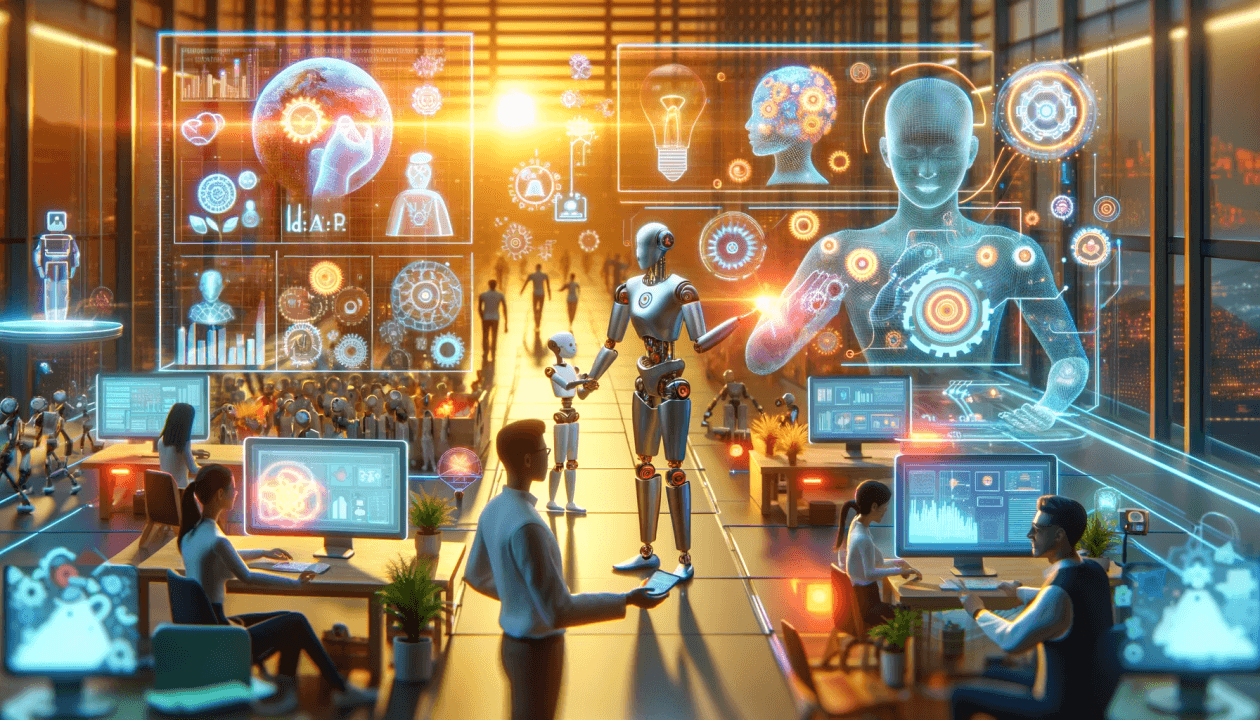
Humanoid robots — such as Tesla’s Optimus — are moving from demonstrations into real-world deployment, where machines no longer just think, but act.
This combination matters.
Software AI reshapes information.
Robotic AI reshapes reality.
As machines take on construction, logistics, manufacturing, maintenance, and eventually most routine physical work, the economic foundation of society shifts. Productivity rises sharply. Labour becomes optional. Scarcity weakens. Speed accelerates.
This is why some describe what’s coming as a “golden age” or a “post-scarcity world.”
But those descriptions skip the hardest part.
Because when machines handle execution, humans are left with something unfamiliar:
choice.
The Real Question Isn’t What AI Can Do
It’s What Humans Will Do With It
For most of human history, survival required work.
Structure was external.
Direction came from institutions.
AI and robotics remove that framework faster than culture can adapt.
This is where the real challenge begins.
Not technological.
Psychological.
Civilisational.
If humans do not learn how to direct, rather than simply perform, then AI will not liberate us — it will expose how little inner clarity we were ever trained to develop.
What follows is not a warning about machines.
It is an honest look at human responsibility in an AI-driven world.
The Shift: From Labour to Direction
The Problem No One Wants to Say Out Loud
Almost everyone alive today has been trained to follow instructions.
Not to think clearly.
Not to decide direction.
Not to question systems.
Just to comply, perform, and repeat.
This worked when the world needed human labour.
It breaks down when machines do the labour better.
And that is the shift we are now in.
Labour Is Ending. Direction Is Not.
For most of history, survival depended on obedience:
-
Show up on time
-
Do what you’re told
-
Don’t ask too many questions
-
Trade time for security
That conditioning runs deep.
The problem is this:
AI doesn’t need obedient workers.
It needs clear direction.
And direction is the one skill most people were never taught.
Why This Is So Hard for People
Let’s be honest.
Many people feel uneasy right now not because of AI itself, but because:
-
Their identity came from a role
-
Their confidence came from instructions
When those disappear, something uncomfortable shows up:
“If no one tells me what to do… who am I?”
This is not a personal failure.
It is the result of mass conditioning.
The Old Model: Humans as Executors
The industrial model trained humans to:
-
Follow processes
-
Meet targets
-
Optimise efficiency
-
Suppress intuition
-
Trust authority over inner judgement
That model produced output.
It did not produce clarity, self-trust, or independent thought.
AI now replaces execution.
Which exposes the gap.
The New Model: Humans as Directors
In an AI-driven world, value shifts to people who can:
-
Decide what matters
-
Set intention
-
Ask good questions
-
Choose direction
-
Stop blindly optimising
This is not about becoming “creative geniuses” overnight.
It is about becoming internally coherent.
Direction does not require brilliance.
It requires clarity.
Why Most People Struggle With Direction
Because direction requires:
-
Pausing instead of reacting
-
Thinking instead of complying
-
Listening inwardly instead of copying outwardly
-
Tolerating uncertainty without panic
None of this is rewarded in traditional systems.
In fact, it was often punished.
So when AI removes structure, many people feel lost—not liberated.
This Is Where Identity Awakening System (IAS) Fits (Quietly, Practically)
IAS is not about telling people what to think.
It does not hand out answers.
It does something more basic—and more necessary:
-
It slows people down
-
It helps them notice their own signals
-
It rebuilds trust in inner judgement
-
It restores the ability to choose one step at a time
In a world moving faster than human nervous systems can handle, clarity becomes survival equipment.
IAS is not a productivity tool.
It is a directional stabiliser.
Direction Is a Learnable Skill
This is the part that matters most.
Direction is not reserved for leaders, visionaries, or “special people”.
It is built through:
-
Asking better questions
-
Taking responsibility for choices
-
Not outsourcing meaning to systems
-
Learning to sit with uncertainty
These are human skills.
AI cannot do them for us.
What Happens If We Don’t Make the Shift
If humans don’t move from labour to direction:
-
AI will optimise meaningless systems
-
Abundance will feel empty
-
Confusion will look like freedom
The risk is not AI domination.
The risk is human abdication.
What Happens If We Do
If humans step into direction:
-
AI becomes a tool, not a master
-
Technology serves real values
-
Life becomes intentional again
Not perfect.
Not utopian.
But sane.
The Real Shift
This is not about technology.
It is about adulthood.
Moving from:
“Tell me what to do”
to:
“I will decide what matters next”
AI makes this unavoidable.
Identity Awakening System exists to help people cross that bridge without breaking themselves.